Weld Neck Flange
Industry-standard solution for high pressure and high temperature applications.
Technical Specifications
Key Features
- Excellent mechanical strength
- High vibration and shock resistance
- Even stress distribution into the pipe
- Long service life
- High temperature capability
- Easy alignment and installation
Applications
- Power plants
- Petrochemical facilities
- High-pressure steam lines
- Refineries
- Compressor stations
- Critical process lines
Dimension Table
| Nominal Size | Outside Diameter (mm) | Thickness (mm) | Bolt Circle (mm) | No. of Bolts | Bolt Size |
|---|---|---|---|---|---|
| 1/2" | 89 | 11 | 60.3 | 4 | 1/2" |
| 1" | 108 | 14 | 79.4 | 4 | 1/2" |
| 2" | 152 | 19 | 120.7 | 4 | 5/8" |
| 4" | 229 | 24 | 190.5 | 8 | 5/8" |
| 8" | 343 | 28 | 298.5 | 8 | 3/4" |
| 12" | 483 | 32 | 431.8 | 12 | 7/8" |
Technical Notes
- 01Pipe wall thickness should match the flange neck thickness.
- 02Welding must be performed by qualified welders.
- 03Consider thermal expansion for high-temperature services.
Weld neck flange: design, standards and selection
A weld neck flange is joined to the pipe with a single circumferential butt weld at the end of its tapered hub. Because the hub carries the load from the flange ring into the pipe wall gradually, the joint tolerates bending, vibration and repeated temperature cycles better than flanges attached by fillet welds. The butt weld can also be examined by radiography or ultrasonic testing, which is why piping specifications for steam, hydrocarbon and high-pressure gas service often make it the default flange.
Dimensions follow ASME B16.5 for NPS 1/2 to 24 in Classes 150 to 2500, ASME B16.47 Series A or B for NPS 26 to 60, and EN 1092-1 Type 11 for PN-rated systems. Typical forging grades are ASTM A105 for ambient service, A350 LF2 where impact testing at low temperature is required, A182 F304L/F316L for corrosive media and A182 F11 or F22 for elevated temperatures.
When ordering, state the bore or the pipe schedule: the hub end must match the pipe wall so the weld bevel (ASME B16.25) lines up without a step. Also specify the facing (RF, FF or RTJ) and the class or PN of the mating flange. For RTJ faces the matching ring gasket is selected by groove number; where there is no room for the hub, a slip-on or blind flange may be the practical alternative.
Related products
Grade datasheets
Chemistry, mechanical properties and equivalents of the steel grades used for this product:
Grade comparisons
What is a weld neck flange?
A weld neck flange has a long tapered hub that is butt-welded to the pipe.
Flanges: guide and FAQGet a Quote
Contact our expert team for pricing and delivery information on this flange type.
Get a QuoteRelated Blog Posts
Technical articles, guides and industry analyses
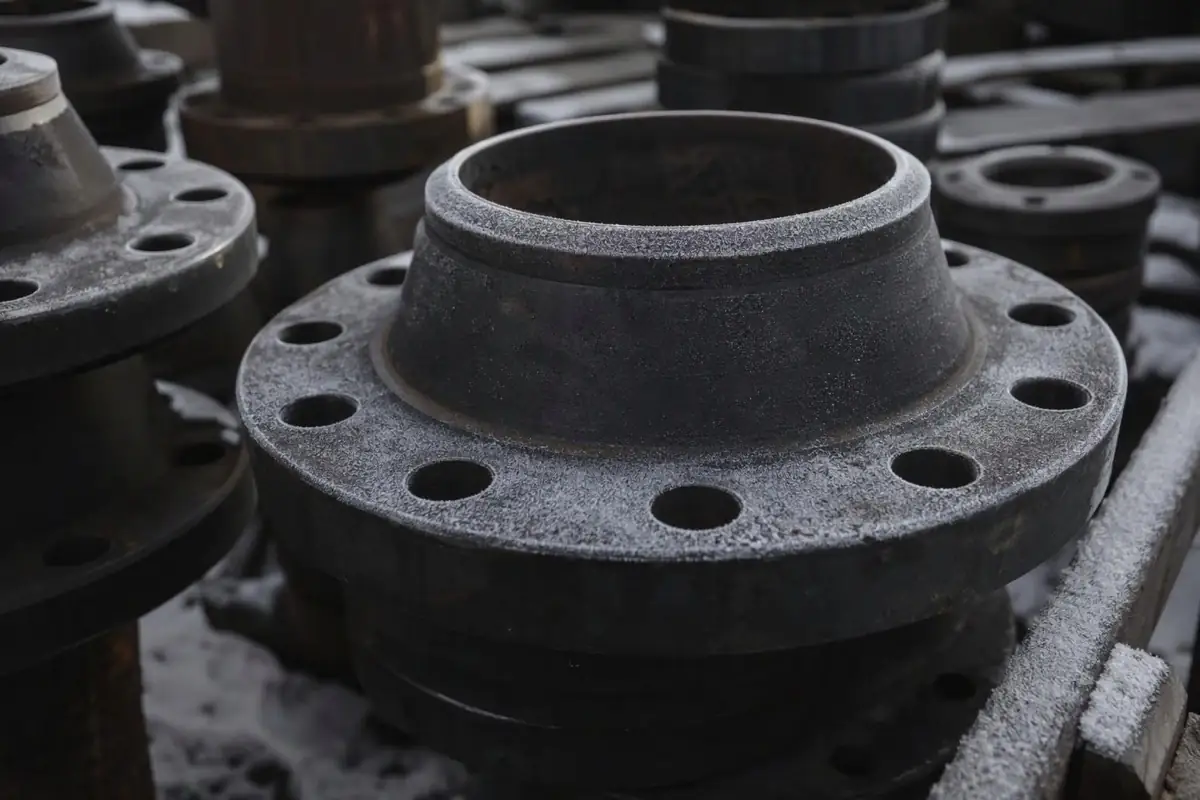
A105 vs A350 LF2: Which Flange Material for Low Temperatures?
A105 and A350 LF2 are two forged carbon steels of the same strength; the real difference is impact testing. LF2 Class 1 is guaranteed by a notch impact test at −46 °C, while A105 has no mandatory impact test. Chemistry and mechanical table, the window that meets both standards, and a flange–pipe–fitting set by design temperature.
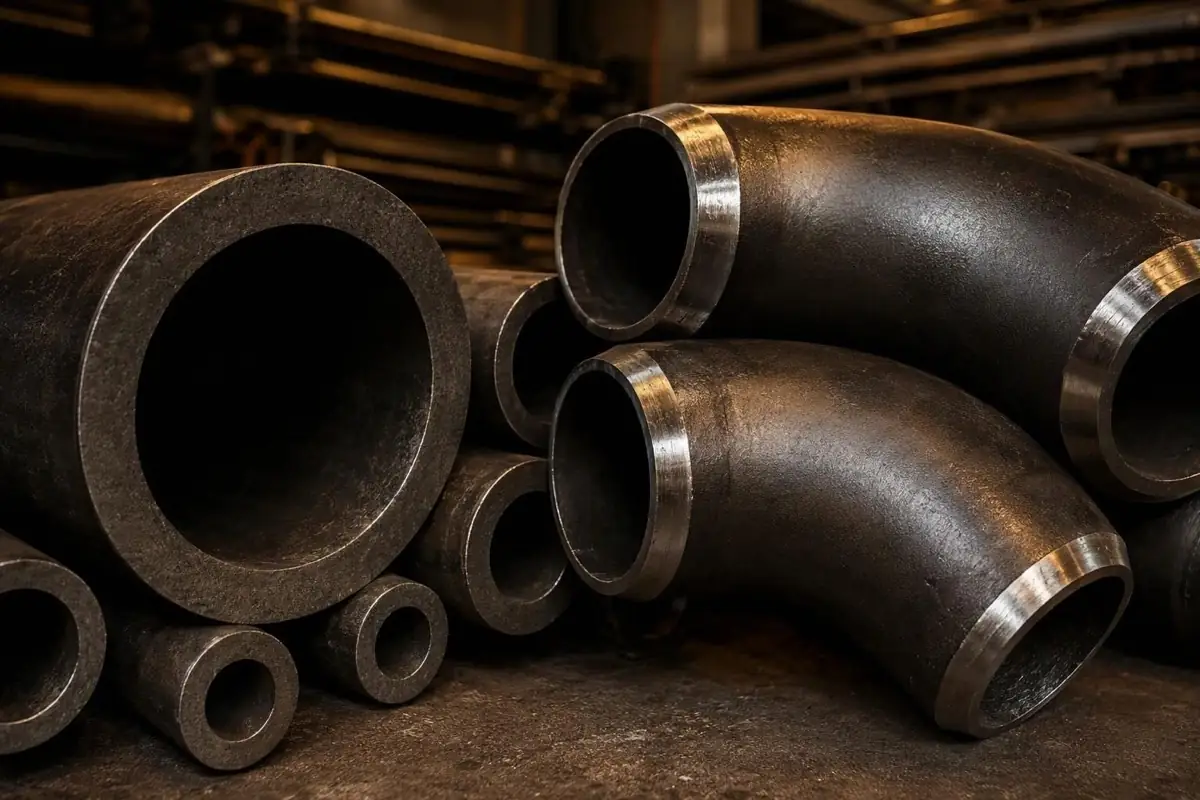
Matching Fittings and Flanges to Pipe Schedule: SCH 80, SCH 160, XXS
Schedule is the pipe's wall thickness; fittings and flanges carry the same information in different ways. On butt-weld fittings the schedule follows the pipe, on socket-weld and threaded fittings the class does, and on weld neck flanges the bore does. We put the matching rules for SCH 160 and XXS lines and our calculated weight table in one place.