
Steel Density Table
Metal Specific Gravities
Density values for carbon steel, stainless steel, alloy steel, and other metals. Reference table for weight calculations.
What is the density of steel?
The density of steel is approximately 7.85 g/cm³ (7,850 kg/m³ = 0.284 lb/in³ = 490 lb/ft³). This is the standard reference value for carbon and low-alloy steel at 20°C. Stainless steels are slightly denser at 7.9–8.0 g/cm³, while cast iron is lighter at 7.0–7.3 g/cm³.
Metal Densities
| Material | Density (g/cm³) | Density (kg/m³) |
|---|---|---|
| Carbon Steel (mild) | 7.85 | 7850 |
| Carbon Steel (high C) | 7.84 | 7840 |
| Alloy Steel (42CrMo4) | 7.85 | 7850 |
| Stainless 304 | 7.93 | 7930 |
| Stainless 316 | 7.98 | 7980 |
| Stainless 410 | 7.75 | 7750 |
| Tool Steel (H13) | 7.80 | 7800 |
| Spring Steel (51CrV4) | 7.85 | 7850 |
| Cast Iron | 7.20 | 7200 |
| Aluminum | 2.71 | 2710 |
| Copper | 8.96 | 8960 |
| Brass | 8.50 | 8500 |
| Titanium | 4.51 | 4510 |
* Values are typical densities at room temperature (20°C). Actual values may vary slightly depending on alloy composition.
Usage in Weight Calculation
To calculate steel part weight, simply multiply volume by density:
Example: 1 meter long, 50mm diameter carbon steel bar:
Steel density and specific gravity
Density is the mass of a material per unit volume and is fundamental for calculating the weight, shipping cost and strength-to-weight ratio of steel parts. The specific gravity of steel (its ratio to water) is numerically equal to its density in g/cm³: ≈ 7.85. As alloying content rises (chromium, nickel, tungsten) the density shifts slightly, so precise weight calculations should use the value for the specific grade.
Frequently Asked Questions
What is the density of steel in kg/m³?+
7,850 kg/m³ (7.85 g/cm³) for carbon steel — the standard reference value used in engineering calculations.
Is the density the same for all types of steel?+
No. Carbon and alloy steels are ≈7.85 g/cm³, stainless steels (304/316) 7.9–8.0 g/cm³, tool steels 8.1–8.7 g/cm³, and cast iron 7.0–7.3 g/cm³.
How do you calculate the weight of a steel part from its density?+
Weight = Volume × Density. Calculate the volume in m³ and multiply by 7,850 kg/m³. Our steel weight calculator does this automatically.
What is the difference between density and specific gravity?+
Density has units (g/cm³); specific gravity is the dimensionless ratio to water. Numerically, the specific gravity of steel is ≈ 7.85.
How much does stainless steel density differ from carbon steel?+
Austenitic grades (304: 7.93; 316: 7.98 g/cm³) are 1–2% denser than carbon steel (7.85). Ferritic and martensitic types (7.70–7.75) are slightly lighter.
Steel Material Supply
Carbon steel, alloy steel, stainless steel - contact us for supply in all steel types.
Get a QuoteRelated Products
Related Sectors
Other Tools
Related Blog Posts
Technical articles, guides and industry analyses
Cast Iron vs Cast Steel: Differences, How to Tell Them Apart, Which to Choose
The only thing separating cast iron from cast steel is carbon content — and that single difference changes toughness, weldability and cost completely. Differences, shop-floor identification tests and a selection guide.
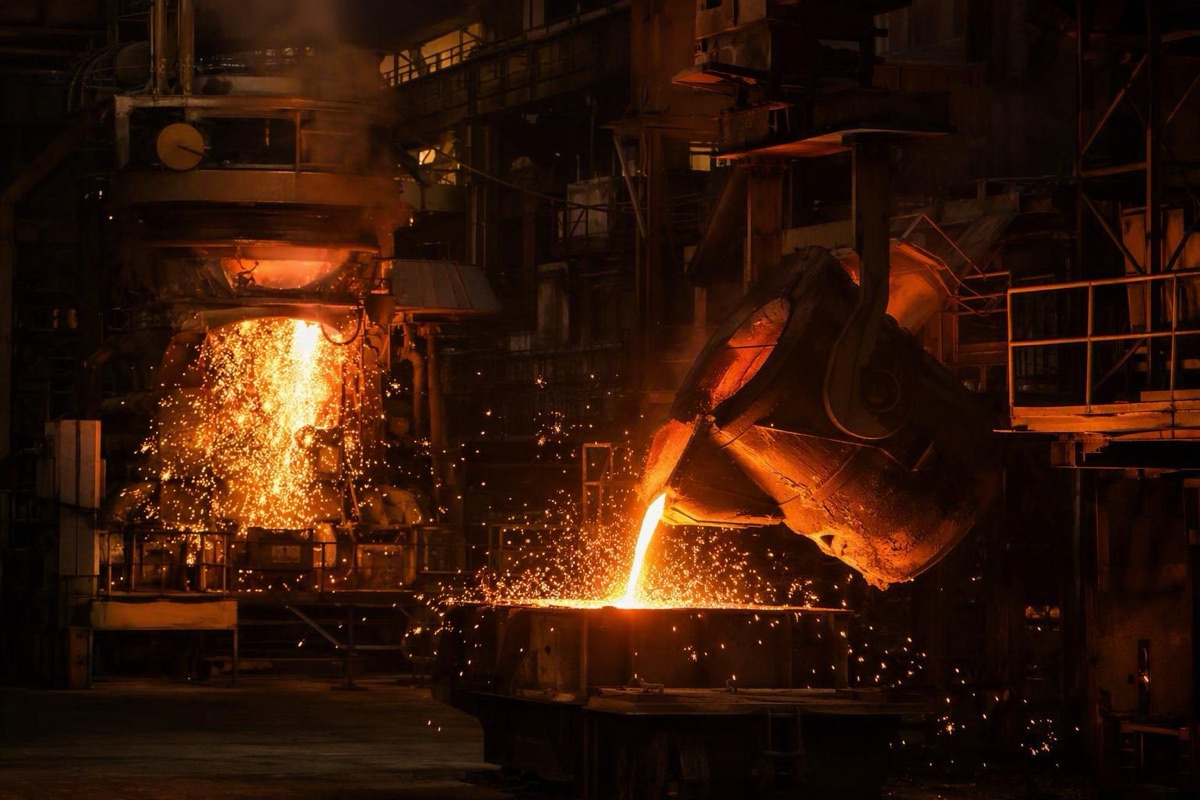
EAF vs BOF: Electric Arc Furnace vs Basic Oxygen Furnace
We compare the electric arc furnace (EAF) and the basic oxygen furnace (BOF) by energy source, charge material, scale, carbon footprint and typical products.