
Foundry Quality Control (NDT)
Comprehensive quality assessment of cast parts via spectrometer, microstructure, mechanical testing and non-destructive testing (UT, RT, MT, PT).
Foundry quality control is the sole guarantee of material reliability and mechanical performance. It involves an integrated process of chemical, microstructural, mechanical and physical evaluation steps.
Spectrometer analysis monitors liquid and solid metal composition at ppm level. ASTM E2567-16 is referenced for microstructure evaluation — graphite nodule shape, nodularity percentage and nodule count per unit area. Non-destructive testing (NDT) methods detect internal voids, porosity and cracks without damaging the part.
This process is carried out at partner mills across our supply network. Aktif Çelik is responsible for grade selection, conformity to specification, inspection documentation (EN 10204) and shipment follow-up.
Technical Parameters
Foundry Quality Control (NDT) — Key technical data of the process
Equipment & Facilities
- Optical Emission Spectrometer (OES)
- Metallographic sample preparation and optical/SEM microscopes
- Universal tensile testing machine
- Brinell/Rockwell/Vickers hardness testers
- Charpy V-notch impact testing system
- Ultrasonic testing (UT) devices and probes
- Radiographic testing (RT) — X-ray / Gamma
- Magnetic particle (MT) and liquid penetrant (PT) kits
Quality Control Points
- OES analysis of C, Si, Mn, P, S, Mg, Cr, Cu — ppm level
- ASTM E2567-16 nodularity and nodule count measurement
- ASTM A247 graphite morphology classification (Type I–VII)
- Tensile test: yield, UTS and % elongation (ASTM E8)
- Charpy impact test: room temp and low temperature
- UT for internal voids and porosity detection
- RT volumetric defect imaging (ISO 4993)
- MT/PT for surface and near-surface crack detection
Reference Standards
Related Products
Products obtained or used in this production process
Technical Support & Quote
Foundry Quality Control (NDT) — For detailed technical information, capacity details and custom production requests, contact our expert team.
Related Blog Posts
Technical articles, guides and industry analyses
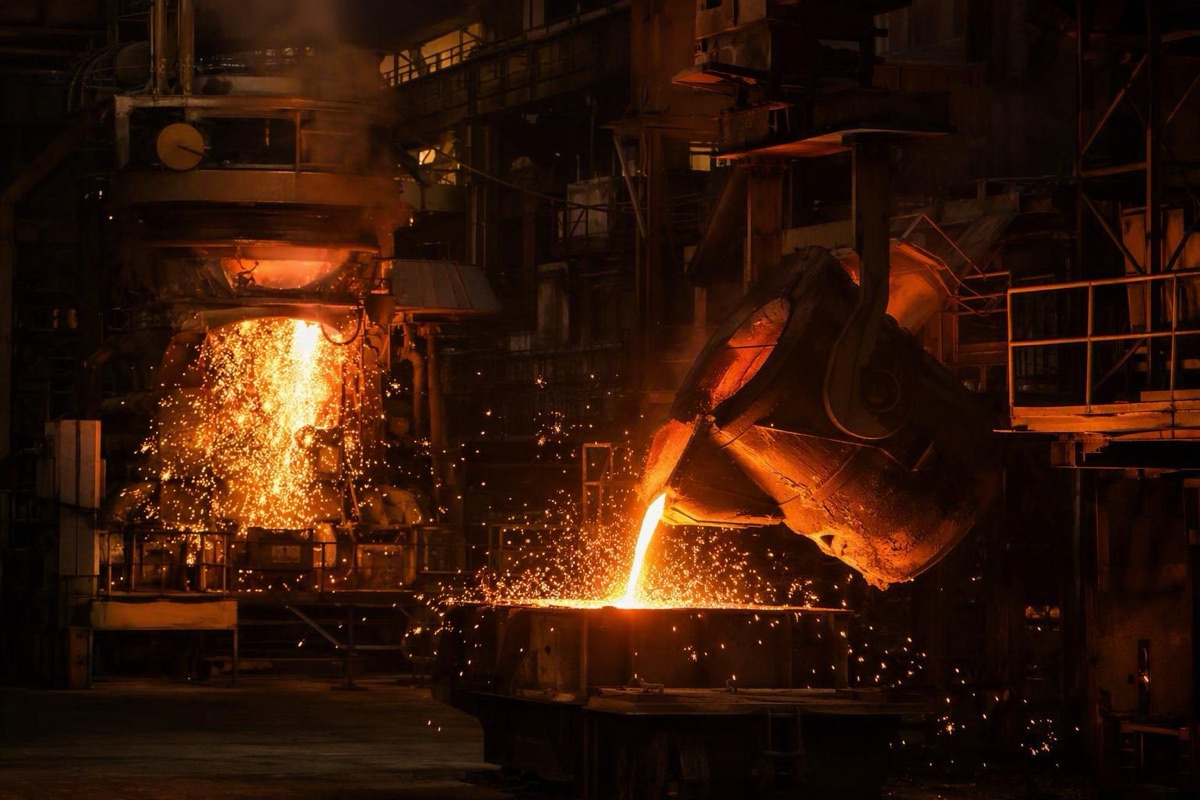
EAF vs BOF: Electric Arc Furnace vs Basic Oxygen Furnace
We compare the electric arc furnace (EAF) and the basic oxygen furnace (BOF) by energy source, charge material, scale, carbon footprint and typical products.
What Is Annealing of Steel? Types, Temperatures and Uses
What is annealing and why does it soften steel? We explain full, process, stress-relief and spheroidize annealing — their temperatures, mechanisms and the difference from normalizing.
Steel Heat Treatment Processes: Annealing, Quenching & Tempering, Normalizing Guide
A comprehensive guide to steel heat treatment processes. Parameters, suitable steel grades, and proper process selection for annealing, normalizing, quenching & tempering, and case hardening.