
Ferro Alloys Technical Catalogue
Comprehensive ferro alloy solutions and technical specifications for steel and foundry industry
Ferro Alloy Types
Select for technical details
Ferroalloys: All types (7)
A short summary of each type is below. Dimension tables, materials and technical notes are on each type's own page.
Ferro alloy used as phosphorus additive in steel and cast iron production.
- Material:
- FeP 23-26
Ferro Chrome
FeCr
Primary chromium source for stainless steel and alloy steel production.
- Material:
- FeCr HC (60-65% Cr), FeCr LC (65-70% Cr)
Ferro Manganese
FeMn
Primary manganese source for deoxidation and alloying in steel production.
- Material:
- FeMn HC (75% Mn), FeMn MC (80% Mn), FeMn LC (80% Mn)
Ferro Silicon Magnesium
FeSiMg
Primary alloy used as nodularizer in ductile iron production.
- Material:
- FeSiMg 5-7% Mg
Ferro Silicon Manganese
FeSiMn
Combined deoxidation and alloying agent in steel production.
- Material:
- FeSiMn (65-68% Mn, 14-18% Si)
Ferro Silicon
FeSi
The most commonly used deoxidant and alloying element in steel and cast iron production.
- Material:
- FeSi 72-78% Si
Inoculants that promote graphite nucleation in ductile and grey cast iron production.
- Material:
- Si 70-76%, Ca 1-2%, Ba 2-4%
Related Sectors
Useful Calculation Tools
Detailed Technical Information and Quotation
Contact our expert team for detailed technical documents, application recommendations, and custom size quotations regarding this product type.
Get a QuoteWhat are ferroalloys?
Ferroalloys are master alloys of iron with a high share of an alloying element (Si, Mn, Cr, Mo, V...): e.g. FeSi75 (72–80% Si), high-carbon FeMn (75–80% Mn), FeCr. They are added to the melt in steelworks and foundries for deoxidation, alloying and inoculation. Using a ferroalloy instead of the pure element is cheaper and dissolves more readily in the melt.
Main ferroalloys and their roles
FeSi (ferrosilicon): the workhorse deoxidizer and Si source in steel; the 75% grade is standard and is also the base of foundry inoculants. FeMn (ferromanganese): deoxidation, sulphur fixing as MnS and Mn alloying; available in high/medium/low-carbon grades. FeCr (ferrochrome): the Cr source for stainless and alloy steels. FeSiMg (ferrosilicon magnesium): nodularizes graphite in ductile iron. Sizing (lump/granule) and addition point (furnace/ladle/cored wire) determine recovery; chemistry is verified by certificate.
Frequently Asked Questions
What is ferrosilicon used for?+
Deoxidation and silicon alloying in steel, and as the base of foundry inoculants. The standard grade is FeSi75 (72–80% Si).
What is ferromanganese used for?+
Deoxidation, fixing sulphur as MnS and manganese alloying. It comes in high-, medium- and low-carbon grades.
Why add a ferroalloy instead of the pure element?+
Lower cost, lower melting point and faster, more efficient dissolution in the melt.
What is FeSiMg (ferrosilicon magnesium)?+
A magnesium-carrying ferroalloy that converts graphite to spheroidal form (nodularizing) in ductile-iron production.
Related Blog Posts
Technical articles, guides and industry analyses
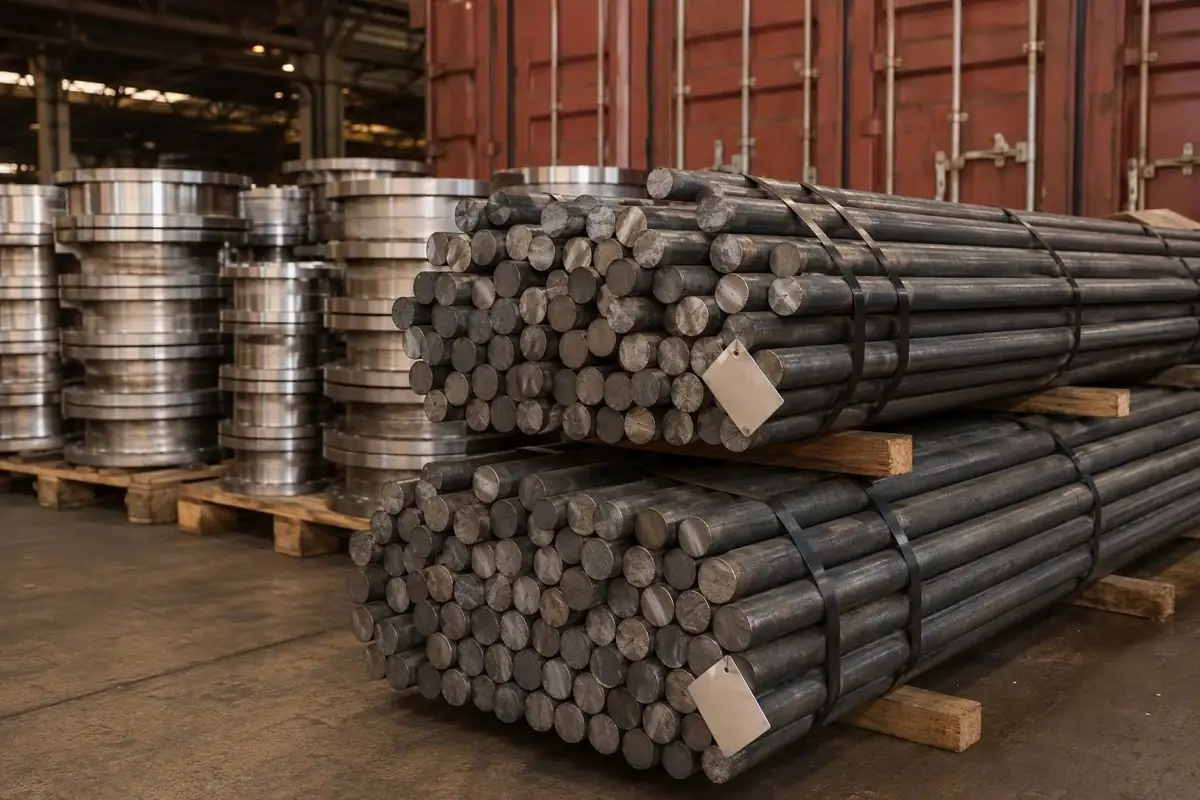
HS Codes for Steel Products: A 6-Digit Guide
The first six digits of any national tariff code are the World Customs Organization's Harmonized System (HS) code, identical in every country. We collected the 6-digit HS headings for steel bars, flanges, fittings, ferroalloys and cast products, plus the thresholds that decide alloy versus non-alloy steel. Final classification is your customs broker's call.
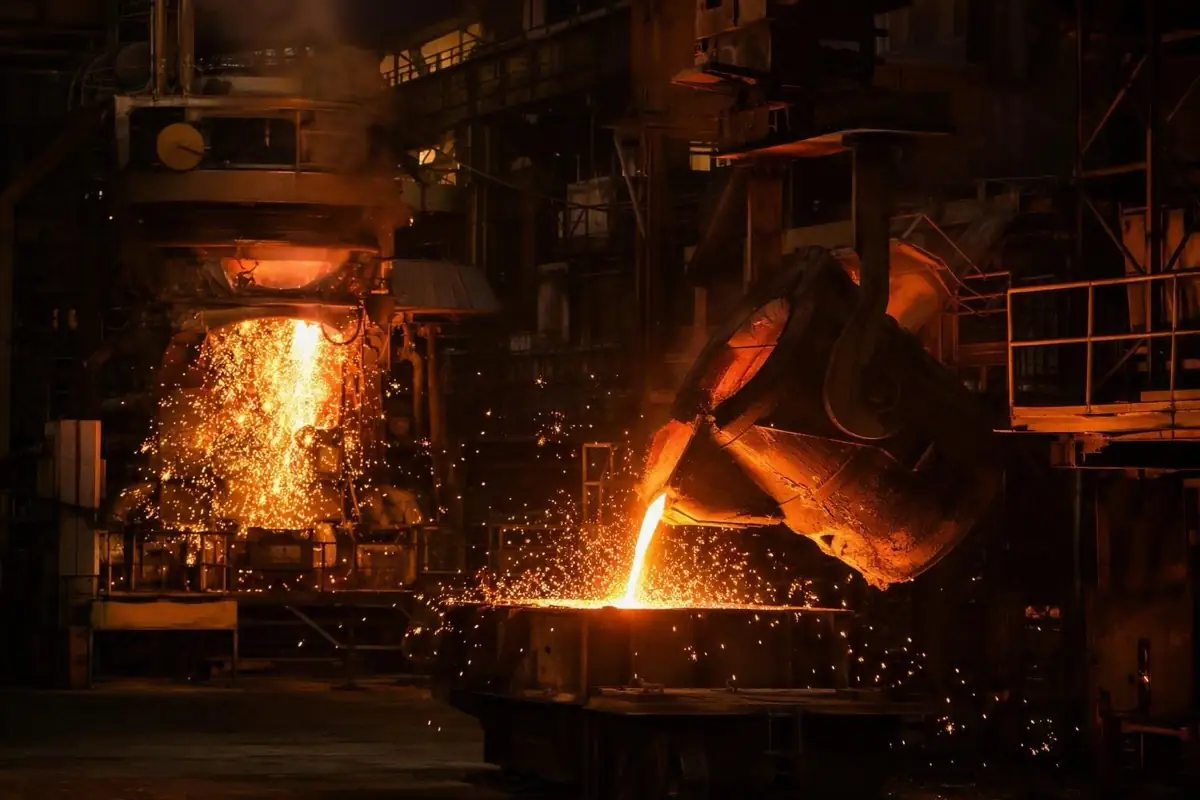
EAF vs BOF: Electric Arc Furnace vs Basic Oxygen Furnace
We compare the electric arc furnace (EAF) and the basic oxygen furnace (BOF) by energy source, charge material, scale, carbon footprint and typical products.