EAF vs BOF: Electric Arc Furnace vs Basic Oxygen Furnace
We compare the electric arc furnace (EAF) and the basic oxygen furnace (BOF) by energy source, charge material, scale, carbon footprint and typical products.
📋 Steelmaking Process → · Continuous Casting → — the melting and casting stages of steel production.
What Are EAF and BOF?
Crude steel is produced worldwide by two main routes, and the difference lies in the energy source and the charge material:
- EAF (Electric Arc Furnace): melts steel using an electric arc; the main charge is scrap steel and direct-reduced iron (DRI/HBI). About 30% of global output, and growing fast.
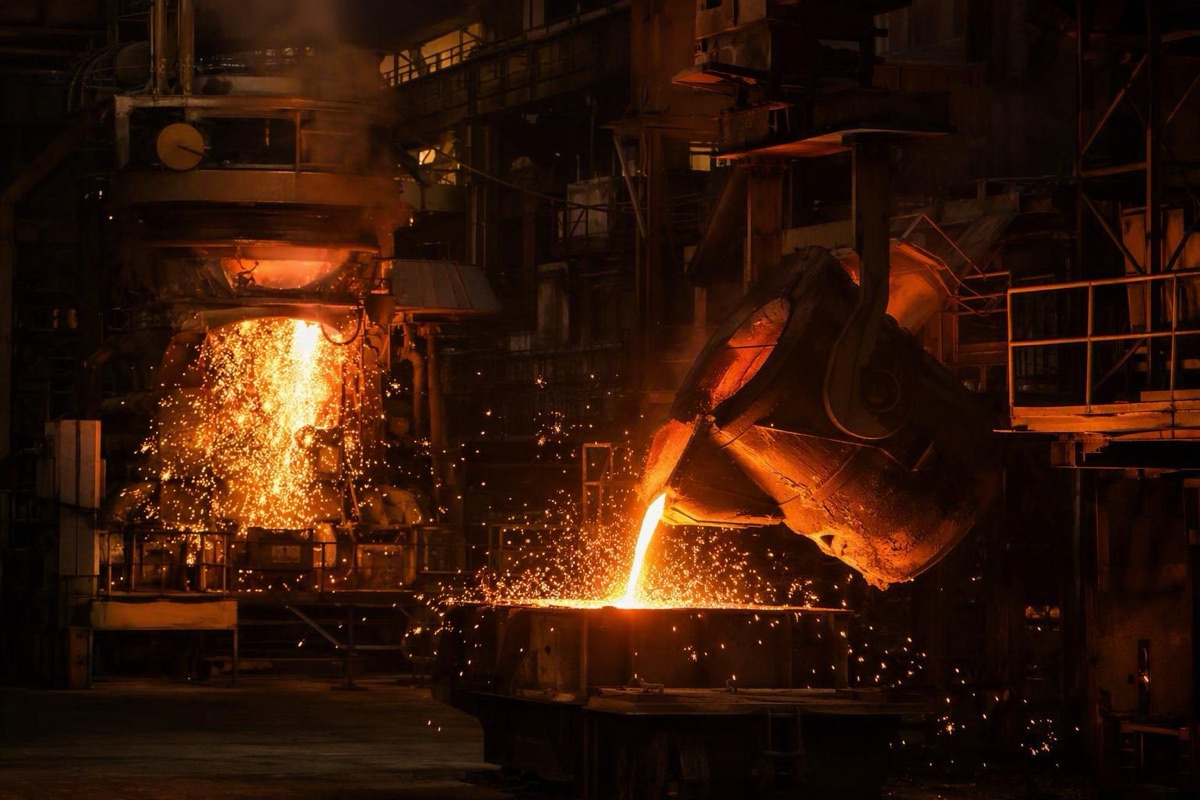
- BOF (Basic Oxygen Furnace): blows oxygen into molten pig iron from the blast furnace, lowering carbon and turning it into steel; roughly 20–25% of the charge is scrap. About 70% of global output.
In short: EAF is scrap-recycling based, flexible and low-carbon; BOF is tied to the blast furnace, integrated and high-tonnage.
Process Comparison
| Criterion | EAF | BOF |
|---|---|---|
| Energy / process | Electric arc | Oxygen blowing (exothermic) |
| Main charge | Scrap steel + DRI/HBI | Molten pig iron + 20–25% scrap |
| Upstream | — (scrap based) | Blast furnace + coke required |
| Scale | Medium / flexible (mini-mill) | Large / integrated plant |
| Global share | ~30% (growing) | ~70% |
| Typical product | Long and special steels | Flat products, high tonnage |
The Decisive Difference: Energy and Charge
- EAF, being electric and recycling scrap, is modular and flexible — it can be stopped and started quickly and is common in mini-mills. Its quality depends on scrap cleanliness; adding DRI/pig iron enables low-residual steel.
- BOF, tied to the blast furnace–coke plant chain, is continuous and very high tonnage. Because molten pig iron is very pure, it is advantageous for low-residual, clean flat steel; however, start/stop flexibility is low.
Use our Chemical Composition tool to examine steel composition by grade.
Environmental Impact (CO₂)
The biggest distinction is the carbon footprint:
- EAF produces markedly less CO₂ per tonne because it melts scrap and needs no coke/blast furnace — and the gap widens further with green electricity. It is central to the steel industry's low-carbon transition.
- BOF has higher CO₂ per tonne due to coke making and blast-furnace reduction. Hydrogen-based DRI + EAF is the long-term alternative to this route.
Which Route for Which Product?
EAF route — abundant scrap, flexibility, long products (bar, section, wire rod) and special/alloy steels; low-emission targets.
BOF route — very high tonnage, flat products (sheet, coil), and applications requiring low-residual cleanliness such as automotive/appliance sheet; integrated-plant economics.
Note: most modern production is hybrid — in both routes, ladle metallurgy, vacuum degassing and continuous casting fine-tune the final composition and cleanliness.
Aktif Çelik's Role
As a steel supplier and exporter, Aktif Çelik provides finished products from both production routes — hot-rolled bar and special steels — with EN 10204 3.1 certificates. We also supply pig iron and ferro alloys, which are inputs to these processes. For grade equivalents and supply, contact our team.
Detailed Technical Info & Quotation
Contact our expert team for detailed technical documents, application recommendations, and custom dimension quotes on this topic.
Get a Quote