Ferroalloy Production (SAF)
Production of ferrochrome, ferromanganese and ferrosilicon in Submerged Arc Furnace (SAF). Alloy extraction from ore via carbothermic reduction.
Ferroalloys are vital for deoxidation, desulfurization, grain refinement and alloying in the steel and foundry industries. Industrial-scale production takes place in Submerged Arc Furnaces (SAF) where electrodes are immersed in the charge material.
The production process is based on the carbothermic reduction of oxide ores at high temperatures. Ferrochrome production occurs at 1600–1750°C, while ferromanganese is produced at 1350–1400°C. In ferrosilicon production, silica in quartzite is reduced with carbon to form the ferrosilicon bath.
The continuous operation capability, energy efficiency and quick changeover between different alloys make SAF an economical solution for steelworks and foundries. The porosity and electrical conductivity of the charge material are critical parameters directly affecting process efficiency.
This process is carried out at partner mills across our supply network. Aktif Çelik is responsible for grade selection, conformity to specification, inspection documentation (EN 10204) and shipment follow-up.
Technical Parameters
Ferroalloy Production (SAF) — Key technical data of the process
Equipment & Facilities
- Submerged Arc Furnace (SAF) – refractory-lined steel shell
- Söderberg / graphite electrodes and electrode lifting system
- Transformers and rectifiers
- Slag and metal ladles, tapping runners
- Cooling, crushing and screening plants
- Dust collection (bag filter) and gas cleaning system
- Charge weighing and feeding bunkers
Quality Control Points
- Chemical analysis: C, Si, Mn, Cr, P, S via spectrometer/wet analysis
- Size classification: 0–10 mm, 10–50 mm, 50–100 mm sieve analysis
- K-factor (MWh/ton) energy efficiency tracking
- Slag basicity ratio control (CaO/SiO₂)
- Sampling and certification per tapping batch
Reference Standards
Related Products
Products obtained or used in this production process
Technical Support & Quote
Ferroalloy Production (SAF) — For detailed technical information, capacity details and custom production requests, contact our expert team.
Related Blog Posts
Technical articles, guides and industry analyses
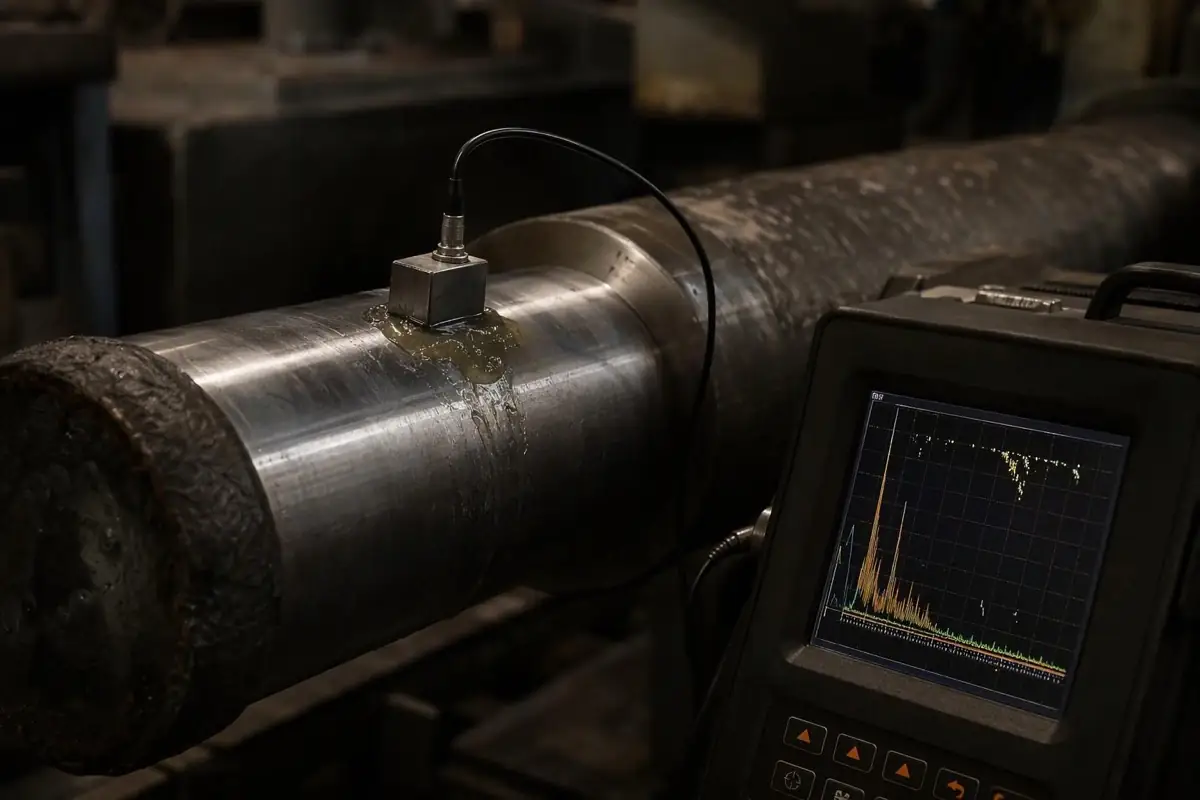
Ultrasonic Testing of Steel Bars and Forgings: EN 10308, EN 10228-3
Ultrasonic testing looks for voids, internal cracks and inclusion clusters inside bars and forgings. We explain when EN 10308 applies to bars, EN 10228-3 to forgings, ASTM A388 to US specifications and SEP 1921 to German drawings, what the test finds and misses, and what to put in the order.
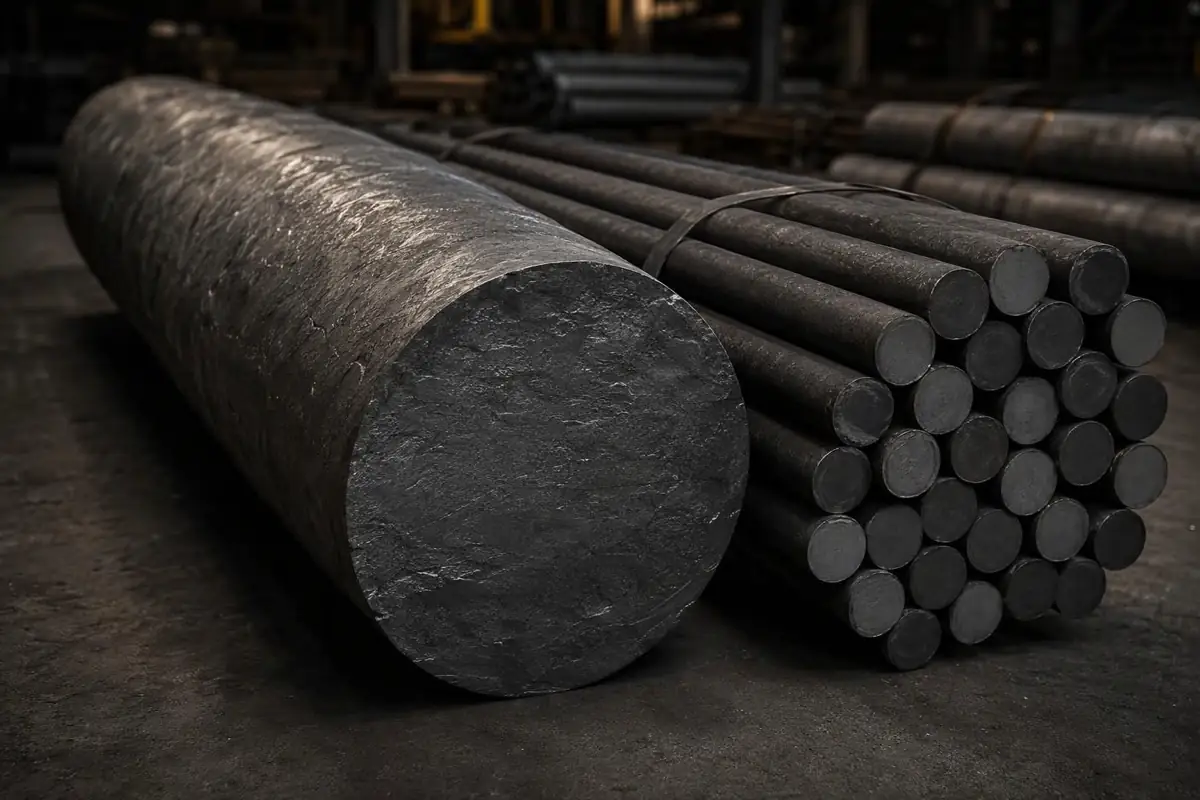
Forged vs Rolled Steel Bar: How to Choose
The same steel grade can be bought as rolled or as forged bar. The difference lies in the production route: reduction ratio, internal soundness, surface, tolerance and cost. We explain which route to choose for which diameter and part, with a worked example and a decision table.
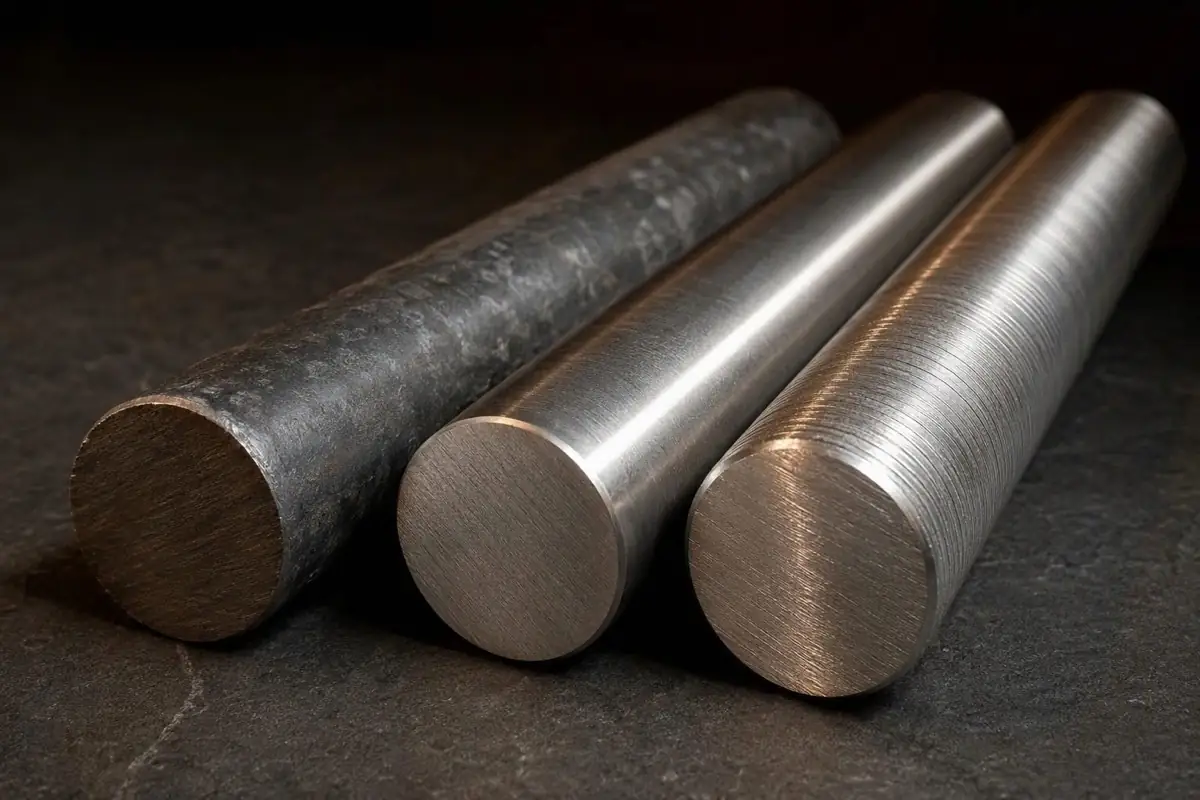
Steel Delivery Condition Codes: What +A, +N, +QT, +C, +SH and +AT Mean
The +A, +N, +QT, +C, +SH and +AT codes after a steel name state the heat-treatment and surface condition in which the material is delivered; hardness, mechanical values and tolerances all depend on them. We explain what each code means, why the order matters in combined codes, and how to choose the right one on an order.