
Tee Fittings Catalog - ASME B16.9
Standard and custom tee fittings for pipeline branching and connection solutions.
Straight Tee
Standard tee fitting designed for equal-diameter flow distribution in piping systems.
Connection Types:
ASME B16.9 Standard Dimensions
| Size | Outside Diameter (mm) | Thickness (mm) | Center to End (mm) | Run | Outlet |
|---|---|---|---|---|---|
| 1/2" | 21.3 | 2.77 | 25 | 25 | 25 |
| 1" | 33.4 | 3.38 | 38 | 38 | 38 |
| 2" | 60.3 | 3.91 | 51 | 51 | 51 |
| 4" | 114.3 | 6.02 | 64 | 64 | 64 |
| 6" | 168.3 | 7.11 | 83 | 83 | 83 |
| 8" | 219.1 | 8.18 | 102 | 102 | 102 |
| 12" | 323.9 | 10.31 | 152 | 152 | 152 |
| 16" | 406.4 | 12.70 | 203 | 203 | 203 |
Key Features
- Equal diameter distribution
- Low flow resistance
- Easy installation
- Standard dimensions
- High pressure strength
- Welding compatibility
Applications
- Main line branching
- System integration
- Valve connections
- Instrumentation
- Sampling lines
- General piping
Flow Characteristics
Design Features
- Uniform wall thickness
- Smooth transition angles
- Weld-prepared ends
- Polished inner surface
- Concentric design
- Radiographic test compatibility
Technical Notes
- Complies with ASME B16.9 standard dimensions
- Ready for butt-weld connections
- Suitable for radiographic and ultrasonic testing
- Fully traceable certified production
Related Sectors
Useful Calculation Tools
Detailed Technical Information and Quotation
Contact our expert team for detailed technical documents, application recommendations, and custom size quotations regarding this product type.
Get Technical SupportWhat is a pipe tee?
A pipe tee is a T-shaped butt-weld fitting used to take a 90° branch off a pipeline. There are two main types: the equal tee (all three outlets the same size) and the reducing tee (smaller branch outlet). Dimensions and tolerances follow ASME B16.9; tees are produced in carbon, alloy and stainless steel from 1/2" to 48".
Choosing between equal, reducing and barred tees
Use an equal tee when the branch matches the run diameter and a reducing tee when it is smaller; the ordering notation is "run × run × branch" (e.g. 8"×8"×6"). On piggable pipelines, a barred tee — with bars welded across the branch opening — keeps the pig from deflecting into the branch. Tees are made from seamless pipe by hot forming or hydraulic bulging, with the wall thickness (schedule) matched to the connecting pipe. Material specs: ASTM A234 WPB for carbon steel, WP11/WP22 for alloy, A403 for stainless, A420 for low-temperature service; EN 10253 on the European side. Products ship with 3.1 material certificates.
Frequently Asked Questions
What is the difference between an equal and a reducing tee?+
An equal tee has all three outlets the same size; a reducing tee has a smaller branch and is ordered as "run × run × branch" (e.g. 6"×6"×4").
What is a barred tee used for?+
Bars welded across the branch opening prevent the pipeline pig from deflecting into the branch. It is standard at every piggable branch on oil and gas transmission lines.
Which standards cover pipe tees?+
Dimensions and tolerances per ASME B16.9 (European equivalent EN 10253); materials per ASTM A234 WPB for carbon steel, A403 for stainless and A420 for low-temperature service.
What information is needed to order a tee?+
Size combination (equal, or run×run×branch), wall thickness (SCH 40, SCH 80, XS...), material grade and quantity; specify barred tee and NACE/3.1 certificate requirements where applicable.
Related Blog Posts
Technical articles, guides and industry analyses
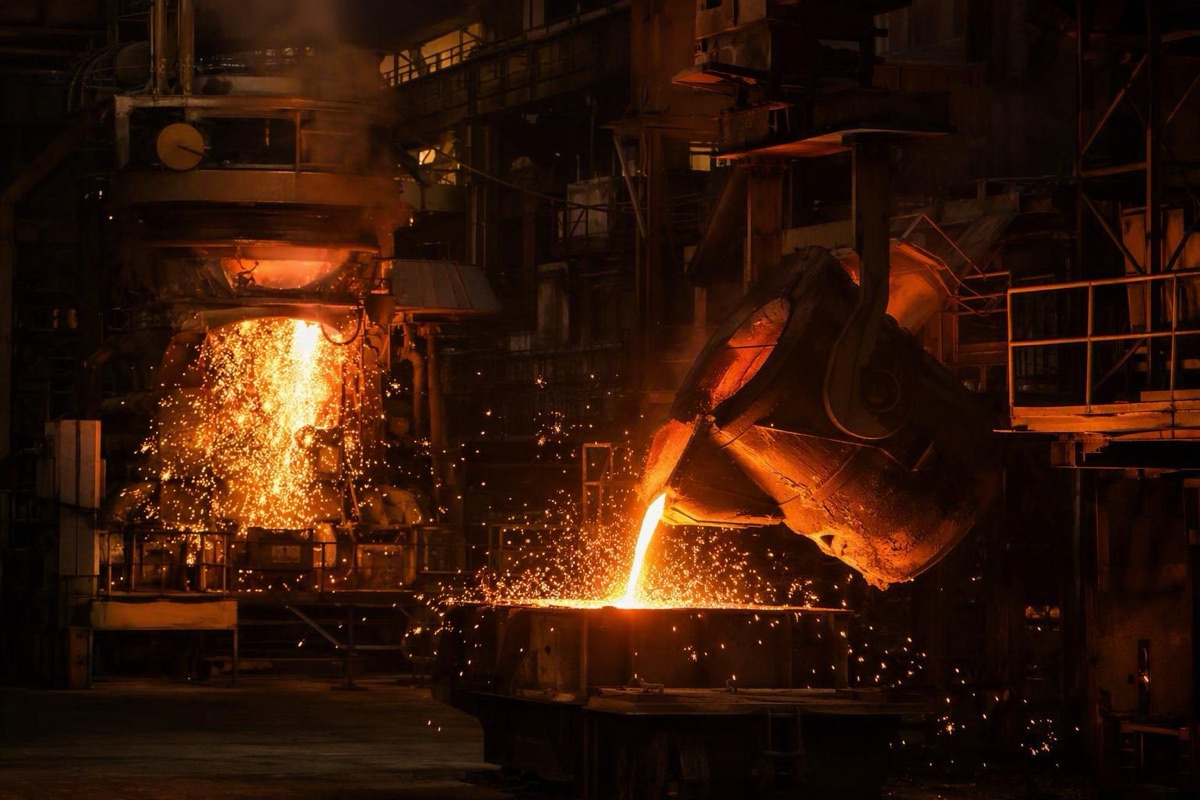
EAF vs BOF: Electric Arc Furnace vs Basic Oxygen Furnace
We compare the electric arc furnace (EAF) and the basic oxygen furnace (BOF) by energy source, charge material, scale, carbon footprint and typical products.
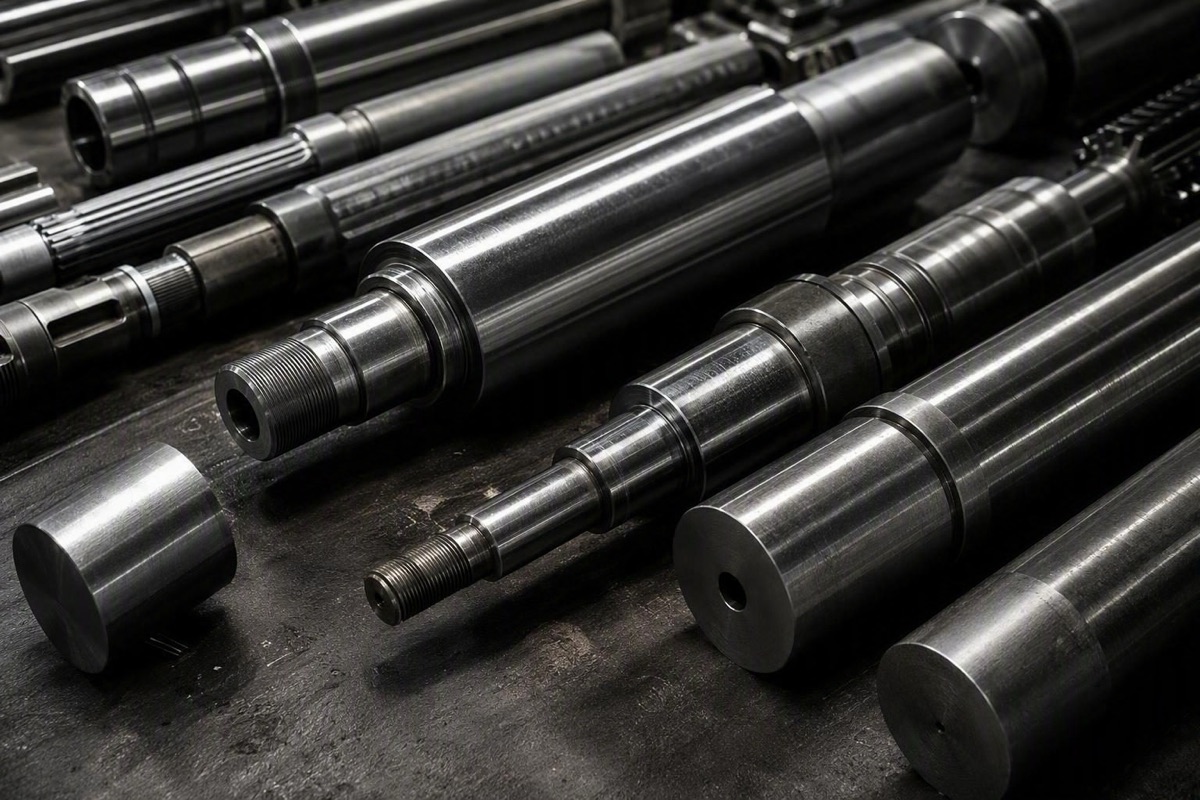
C45 vs 42CrMo4 Steel: Carbon or Alloy — Which to Choose?
We compare C45 (1045) carbon steel with 42CrMo4 (4140) chrome-moly quenched & tempered steel by hardenability, strength, welding and cost — which to choose and when?