
Heat Treatment
Annealing (700–900°C), quenching & tempering (850°C + tempering), normalizing and case hardening. Optimization of mechanical properties.
Heat treatment is the process of optimizing the internal structure (microstructure) and mechanical properties of steel through controlled heating-cooling cycles. Different heat treatment recipes are applied according to each steel grade and application area. This process determines the balance of hardness, strength, toughness, and machinability of steel.
Annealing: The process of softening steel by heating to 680–900°C and slowly cooling. It is applied to relieve internal stresses, create a homogeneous grain structure, and prepare for subsequent processing (machining, cold forming). Machinability of steel is maximized through spheroidizing annealing.
Quenching & Tempering: The process of heating steel to 830–880°C, rapidly cooling in oil or polymer medium (hardening), and then tempering at 150–700°C. Martensite structure is formed by hardening; the desired hardness-toughness balance is achieved by tempering. Quenched and tempered steels like 42CrMo4 and 34CrNiMo6 gain their service properties through this process.
Case Hardening: The process of forming a hard shell on the surface of low-carbon steels (C10, 16MnCr5, 20MnCr5) through carbon diffusion at 880–950°C. Surface hardness reaches 58–62 HRC while the core remains tough. Applied in parts requiring wear resistance such as gears, camshafts, and bearing rings.
This process is carried out at partner mills across our supply network. Aktif Çelik is responsible for grade selection, conformity to specification, inspection documentation (EN 10204) and shipment follow-up.
Technical Parameters
Heat Treatment — Key technical data of the process
Equipment & Facilities
- Atmosphere-controlled box furnaces
- Continuous conveyor furnace
- Oil quenching tank (controlled at 60°C)
- Polymer quenching tank
- Tempering furnaces (with circulation)
- Endothermic gas generator (case hardening)
- Carbonitriding unit
- Induction heating system
Quality Control Points
- Hardness measurement (Brinell, Rockwell, Vickers)
- Microstructure examination (metallography)
- Tensile test (yield, ultimate, elongation)
- Charpy impact test
- Decarburization depth control
- Case depth measurement (CHD)
- Furnace temperature uniformity test (TUS, AMS 2750)
Reference Standards
Related Products
Products obtained or used in this production process
Technical Support & Quote
Heat Treatment — For detailed technical information, capacity details and custom production requests, contact our expert team.
What is heat treatment of steel?
Heat treatment is the controlled heating and cooling of steel to change its mechanical properties (hardness, strength, toughness, machinability). The main processes are annealing (softening), normalizing (grain refinement), quenching and tempering (Q&T: high strength plus toughness), case hardening (carburizing) and induction hardening (localized surface hardness). The microstructure change defines the properties.
Main heat-treatment processes and how to choose
Annealing softens the steel and relieves internal stresses (for machinability). Normalizing refines and homogenizes the ferrite-pearlite structure. Quenching and tempering forms martensite and then tempers it in grades like 42CrMo4 and C45, balancing strength and toughness — the standard route for shafts and gears. Carburizing diffuses carbon into a low-carbon steel surface (58–62 HRC case with a tough core). Induction hardening heats only the required zone with a coil in seconds and quenches it, creating a wear surface. The process is selected by grade, section size and target hardness, and verified by hardness testing and, if needed, microstructure analysis.
Frequently Asked Questions
What is the difference between annealing and normalizing?+
Annealing cools slowly in the furnace → the softest, most machinable structure. Normalizing cools in air → a finer-grained, slightly stronger and more homogeneous structure.
What does quenching and tempering achieve?+
Quenching gives high hardness via martensite but is brittle; tempering restores toughness. Result: high strength plus good toughness (e.g. Q&T 42CrMo4: ~28–34 HRC).
Where is induction hardening used?+
Shaft journals, gear teeth and chrome-plated hydraulic rods — anywhere wear resistance is needed only at the surface. It is fast, localized and energy-efficient.
Which steel gets which heat treatment?+
Low-carbon steels are carburized; medium-carbon/alloy grades (C45, 42CrMo4) are quenched and tempered; free-cutting steels usually stay as-machined; tool steels need dedicated hardening cycles.
Related Blog Posts
Technical articles, guides and industry analyses
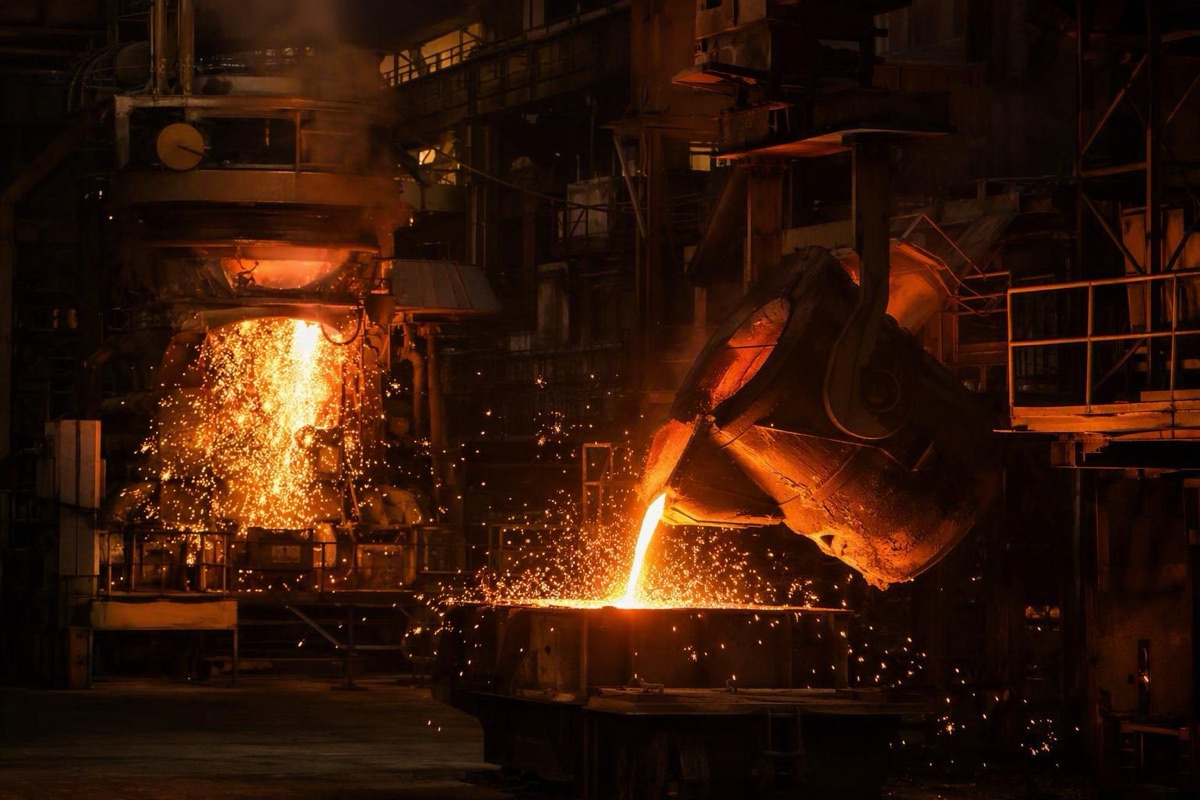
EAF vs BOF: Electric Arc Furnace vs Basic Oxygen Furnace
We compare the electric arc furnace (EAF) and the basic oxygen furnace (BOF) by energy source, charge material, scale, carbon footprint and typical products.
What Is Annealing of Steel? Types, Temperatures and Uses
What is annealing and why does it soften steel? We explain full, process, stress-relief and spheroidize annealing — their temperatures, mechanisms and the difference from normalizing.
Steel Heat Treatment Processes: Annealing, Quenching & Tempering, Normalizing Guide
A comprehensive guide to steel heat treatment processes. Parameters, suitable steel grades, and proper process selection for annealing, normalizing, quenching & tempering, and case hardening.