
Yükleniyor...
What is cold drawn steel?
Cold drawn steel is made by pulling descaled hot-rolled bar through a die at room temperature. The result: precise h9–h11 tolerances, a bright scale-free surface, and higher yield and tensile strength through strain hardening. Supplied in round, square and flat profiles to EN 10277.
The cold drawing process and what it does to the steel
The process has three main steps: descaling (mechanical or pickling), drawing through a carbide die (the cross-section is typically reduced 10–30%) and straightening/cutting. Cold deformation work-hardens the material: yield and tensile strength rise markedly while elongation and toughness drop somewhat; a stress-relief anneal removes internal stresses where needed. The dimensional accuracy (h9/h10/h11 per ISO 286) and clean surface make further machining unnecessary in many applications — automatic lathes run cold drawn bar directly. Typical uses: shaft and axle blanks, fasteners, hydraulic applications and precision machine parts. Carbon steels (C15–C45), free-cutting steels (11SMn30) and alloy grades are stocked as cold drawn; round, square and flat sections give a ready-to-size advantage in fixtures and fabrication. The h9 class is not a single number: it opens up with section size following the IT grades of ISO 286. For a drawn round bar the permitted deviation in h9 is 30 µm from 3 to 6 mm, 36 µm from 6 to 10 mm, 43 µm from 10 to 18 mm, 52 µm from 18 to 30 mm, 62 µm from 30 to 50 mm and 74 µm from 50 to 80 mm — always in the minus direction, so the nominal size is the upper limit. A Ø20 h9 bar therefore lies between 19.948 and 20.000 mm. Classes h10 and h11 widen that band; below h9 you move to ground bar. The three profile families answer different needs: round for shafts, axles and turned blanks; square for keys, tool holders and indexed parts; flat for base plates, spacers and platens, where a ready-to-size section removes a milling operation outright. On the grade side, carbon steels (C15–C45) cover general engineering, alloy quenched-and-tempered grades (42CrMo4) handle loaded parts, and free-cutting steels (11SMn30, 11SMnPb30) serve high-volume work on automatic lathes — the latter are almost always supplied cold drawn anyway, because surface finish and sectional consistency directly govern tool life.
Frequently Asked Questions
Cold drawn vs hot rolled — what is the difference?+
Hot rolled is formed at high temperature: wide tolerances, scaled surface, low cost. Cold drawn is pulled through a die at room temperature: h9–h11 tolerance, bright surface and strength raised by strain hardening.
How does cold drawing change mechanical properties?+
Strain hardening raises yield and tensile strength markedly while elongation and toughness fall. Where internal stresses are critical, a stress-relief anneal is applied.
Which tolerances are produced?+
Standard cold drawn tolerance is h9–h11 per ISO 286; EN 10277 defines the technical delivery conditions for bright steel products. For tighter tolerances, ground bar is the next step.
Which profiles and grades are available?+
Round, square and flat profiles; carbon steels (C15–C45), free-cutting steels (11SMn30, 11SMnPb30) and alloy Q&T grades are supplied cold drawn.
Related Blog Posts
Technical articles, guides and industry analyses
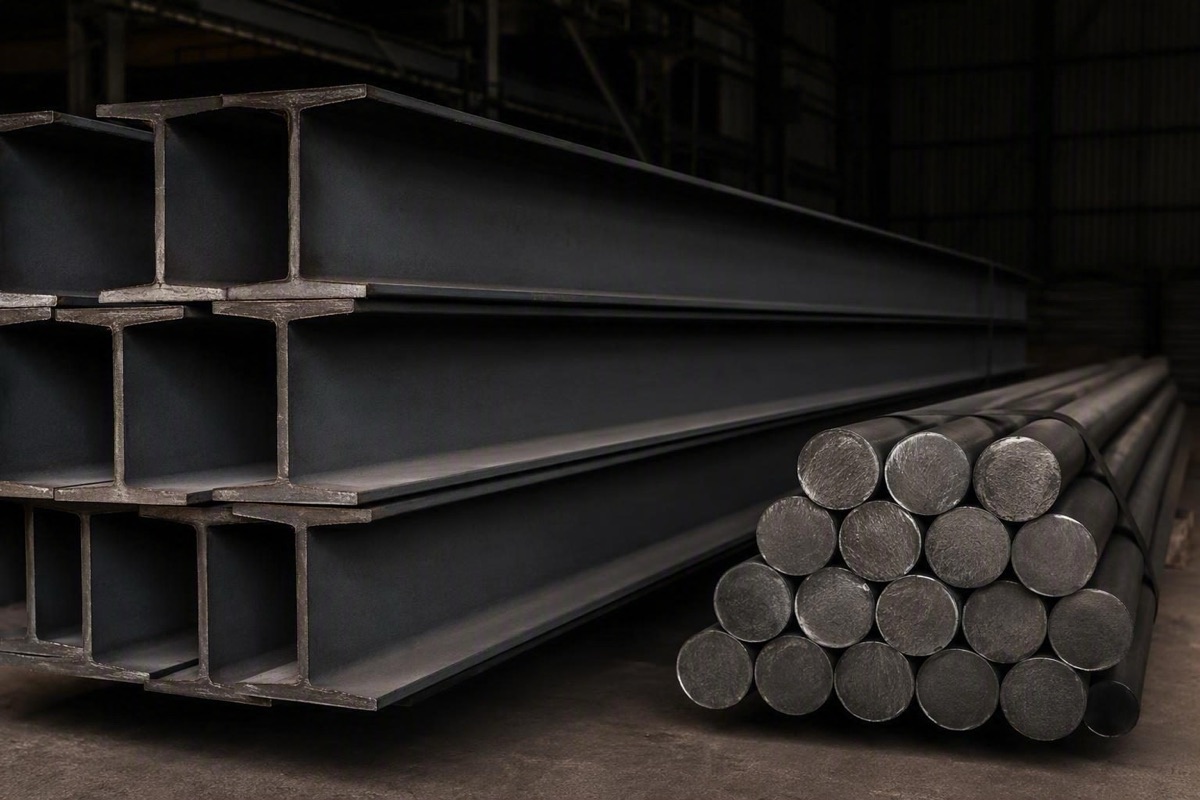
S235 vs S355 Steel: Which Structural Steel to Choose?
We compare S235JR and S355J2 structural steels by yield strength, chemical composition, weldability and cost — which grade should you choose and when?
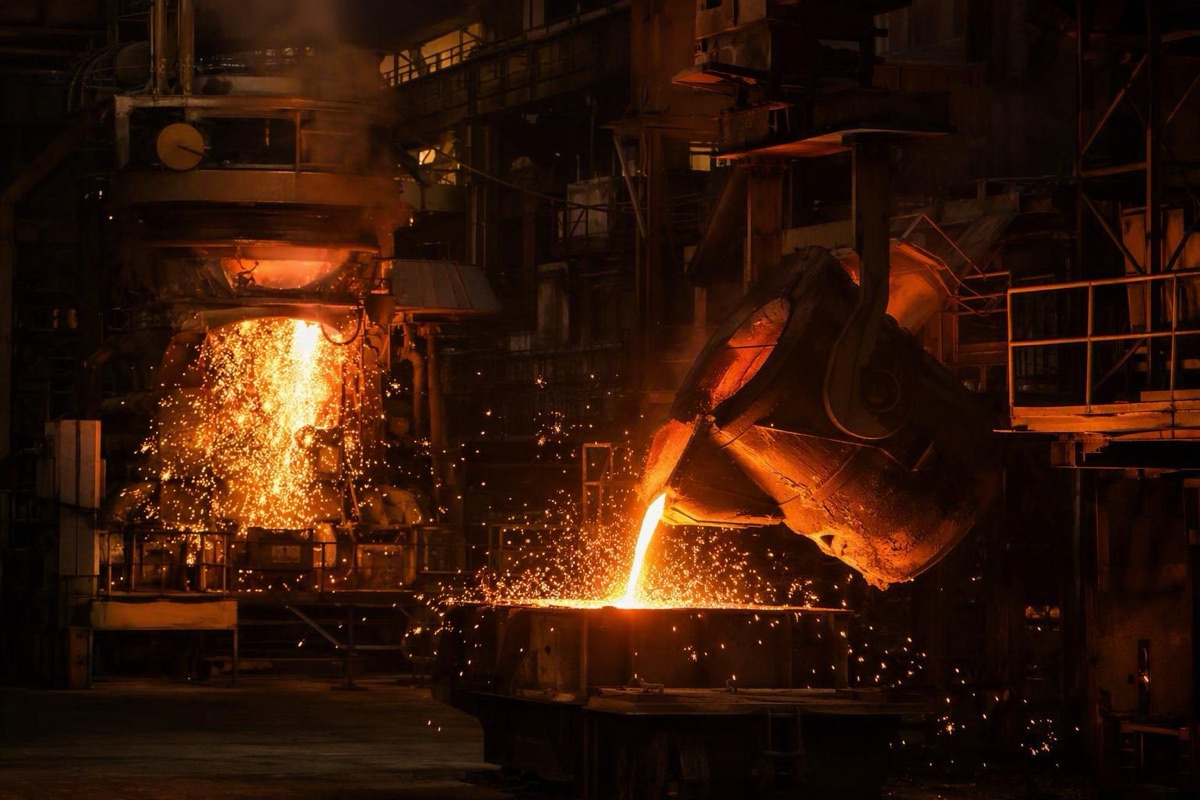
EAF vs BOF: Electric Arc Furnace vs Basic Oxygen Furnace
We compare the electric arc furnace (EAF) and the basic oxygen furnace (BOF) by energy source, charge material, scale, carbon footprint and typical products.