
Square Steel Bar
Precision cold-drawn square steel bar used in mechanical, construction, and industrial applications.
Square Steel Bar
Precision cold-drawn square steel bar used in mechanical, construction, and industrial applications.
Available Types
Technical Specifications
Key Features
- Excellent corner geometry
- Tight dimensional accuracy
- Good machinability
- Homogeneous structure
- High strength
- Various material grades available
Applications
- Die and mold components
- Structural joints
- Machine frame manufacturing
- Coupling shafts
- Furniture and equipment parts
- Mechanical assemblies
Dimension Table
| Size | Length (mm) | Weight (kg) |
|---|---|---|
| 20x20 mm | 6 m | 3.13 kg/m |
| 40x40 mm | 6 m | 12.5 kg/m |
| 60x60 mm | 6 m | 28.2 kg/m |
| 100x100 mm | 6 m | 78.5 kg/m |
Technical Notes
- 01C45 grade recommended for hardness and strength.
- 02ST37 suitable for welding applications.
- 03Corner tolerances comply with DIN 1014.
Cold-drawn square bar: keys, tool shanks and indexed parts
Cold-drawn square bar is chosen when a part needs four flat, parallel faces at a defined size without milling: parallel keys and keystock, turning-tool and boring-bar shanks, slides and gibs in small mechanisms, square drive shafts and couplings, linkages, indexing blocks and bolted frames. Because the faces and size come straight from the die, a square bar saves a milling set-up and seats consistently in fixtures and holders.
Dimensions and tolerances of drawn squares are covered by EN 10278, where the usual tolerance class for squares is h11, with tighter classes on request. Unlike a round, a drawn square has slightly rounded corners, and the standard limits both the corner radius and the twist along the length. Bright key steel for parallel keys is a separate product to DIN 6880, with an h9 tolerance on width to match keys to DIN 6885. Grades follow EN 10277: S235JRC and S355J2C for general and welded parts, C45+C for keys and higher strength, and 11SMn30+C where heavy machining follows.
For keys, use key steel rather than general square bar so that the fit in the keyway is controlled. If sharp corners are required, say so, because they need machining after drawing. Check twist on long bars used as guides. For larger sections, or where only a rough size is needed, hot-rolled square is more economical; for round stock, see cold-drawn round bar.
Related products
Grade datasheets
Chemistry, mechanical properties and equivalents of the steel grades used for this product:
What is cold drawn steel?
Cold drawn steel is made by pulling descaled hot-rolled bar through a die at room temperature.
Cold Drawn Bars: guide and FAQRelated Blog Posts
Technical articles, guides and industry analyses
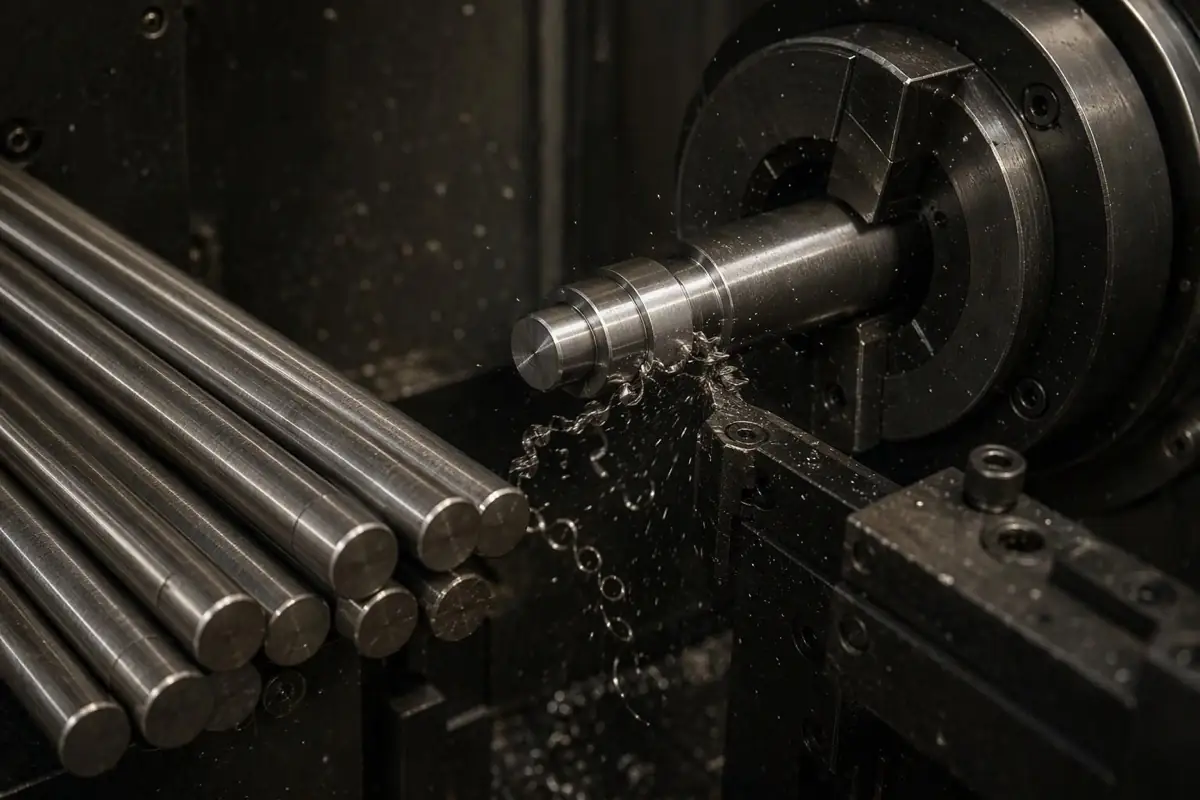
Free-Cutting Steel Grades: Choosing from 11SMn30 to 44SMn28
Free-cutting steel is more than 11SMn30 and 11SMnPb30. EN ISO 683-4 (formerly EN 10087) splits these steels into three groups: not intended for heat treatment, suitable for case hardening and suitable for quenching and tempering. Chemistry table, how machinability works and which grade suits which part.
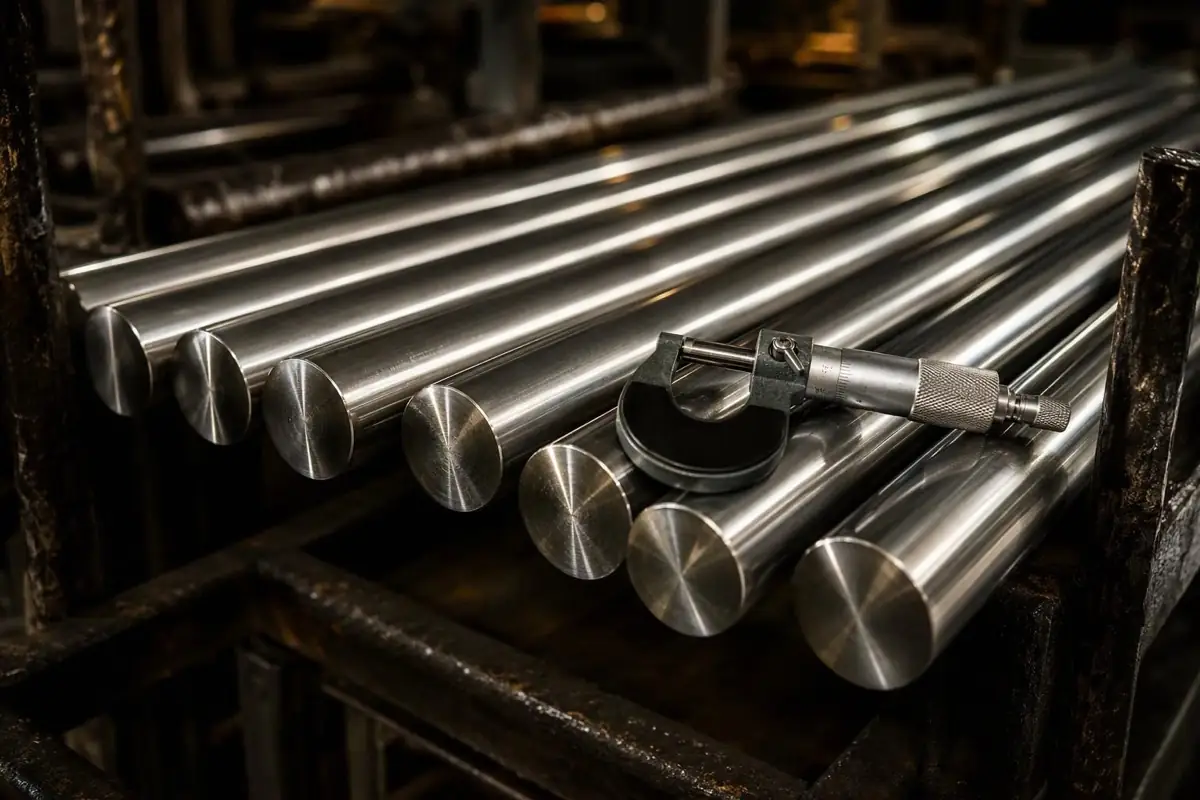
h9, h10, h11 Tolerances for Bright Steel Bars: How to Choose
For bright bars, h9, h10 and h11 are ISO 286 shaft tolerance classes: the upper deviation is zero and the lower deviation is negative, depending on diameter. We explain which production route gives which tolerance, what the difference between h9 and h11 means in microns, and what else must be written on the order next to the tolerance.