Hot Rolling
Heating billets to 1050–1250°C and passing through roughing and finishing mills. Production in bar, profile and flat form. Per EN 10060 standard.
Hot rolling is the process of plastically deforming billets obtained from continuous casting at high temperatures to achieve desired cross-sections and dimensions. Billets are first heated homogeneously to 1050–1250°C in a walking beam furnace. Homogeneous heating guarantees equal deformation during rolling and uniform grain structure.
Heated billets pass through roughing stands where the cross-sectional area is greatly reduced. Then, final dimensions are gradually achieved in the intermediate mill group and finishing stands. A 15–30% cross-section reduction is applied at each stand pass. Through a total of 18 passes, steel is brought to the desired round, square, hexagonal, or flat form.
After rolling, steel bars are cooled in a controlled manner on the cooling bed. The cooling rate is adjusted according to steel grade — air cooling for normalization effect, or accelerated cooling (QTB — Quenching and Tempering Bar) for higher strength can be applied.
In the final stage, straightening, cold cutting for length, and marking operations are performed. The laser dimension measurement system verifies that each bar is within tolerance limits. Production is carried out according to EN 10060 standard and each batch is delivered with EN 10204 3.1 certificate.
This process is carried out at partner mills across our supply network. Aktif Çelik is responsible for grade selection, conformity to specification, inspection documentation (EN 10204) and shipment follow-up.
Technical Parameters
Hot Rolling — Key technical data of the process
Equipment & Facilities
- Walking beam reheating furnace
- Breakdown stands (roughing mill)
- Intermediate mill group
- Finishing stands
- Cooling bed
- Straightening machine
- Cold cut shear / saw
- Automatic dimension measurement system
Quality Control Points
- Laser dimension measurement system (online)
- Surface defect detection system (Eddy Current)
- Mechanical test sampling (per lot)
- Straightness control
- Surface quality classification
- Length and weight control
Reference Standards
Related Products
Products obtained or used in this production process
Technical Support & Quote
Hot Rolling — For detailed technical information, capacity details and custom production requests, contact our expert team.
Related Blog Posts
Technical articles, guides and industry analyses
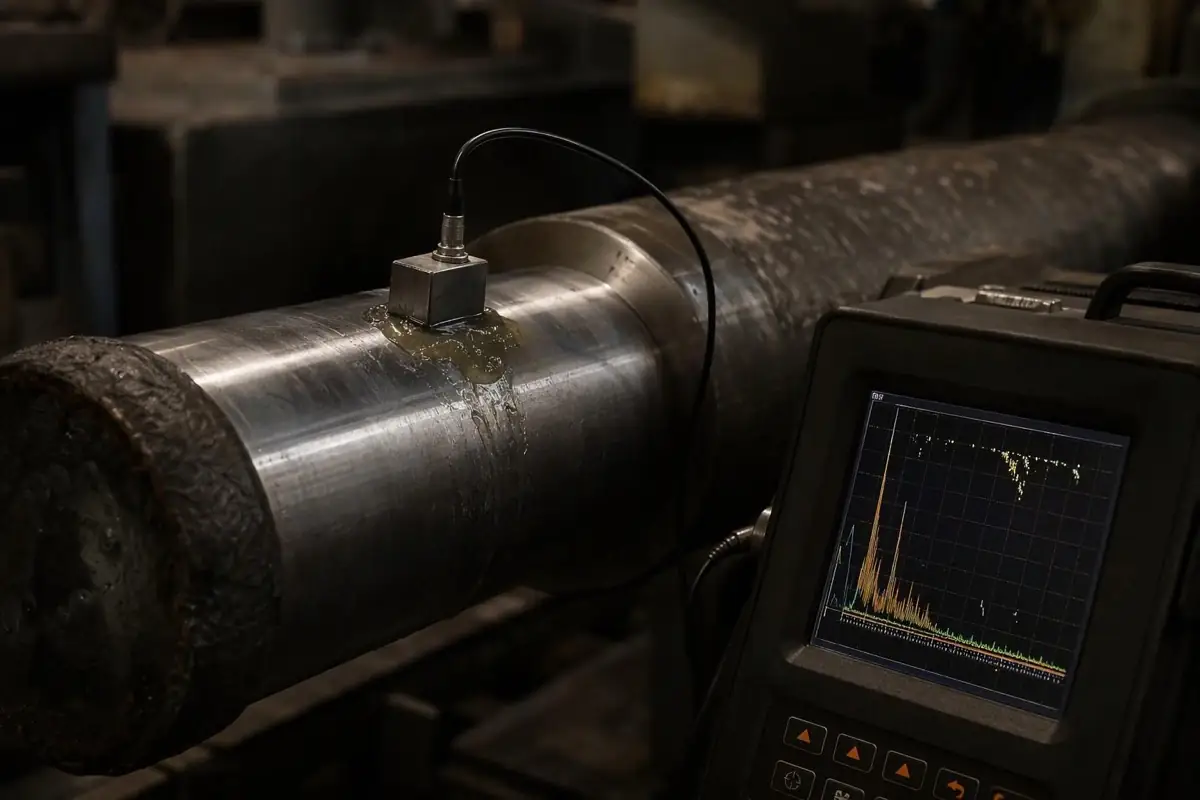
Ultrasonic Testing of Steel Bars and Forgings: EN 10308, EN 10228-3
Ultrasonic testing looks for voids, internal cracks and inclusion clusters inside bars and forgings. We explain when EN 10308 applies to bars, EN 10228-3 to forgings, ASTM A388 to US specifications and SEP 1921 to German drawings, what the test finds and misses, and what to put in the order.
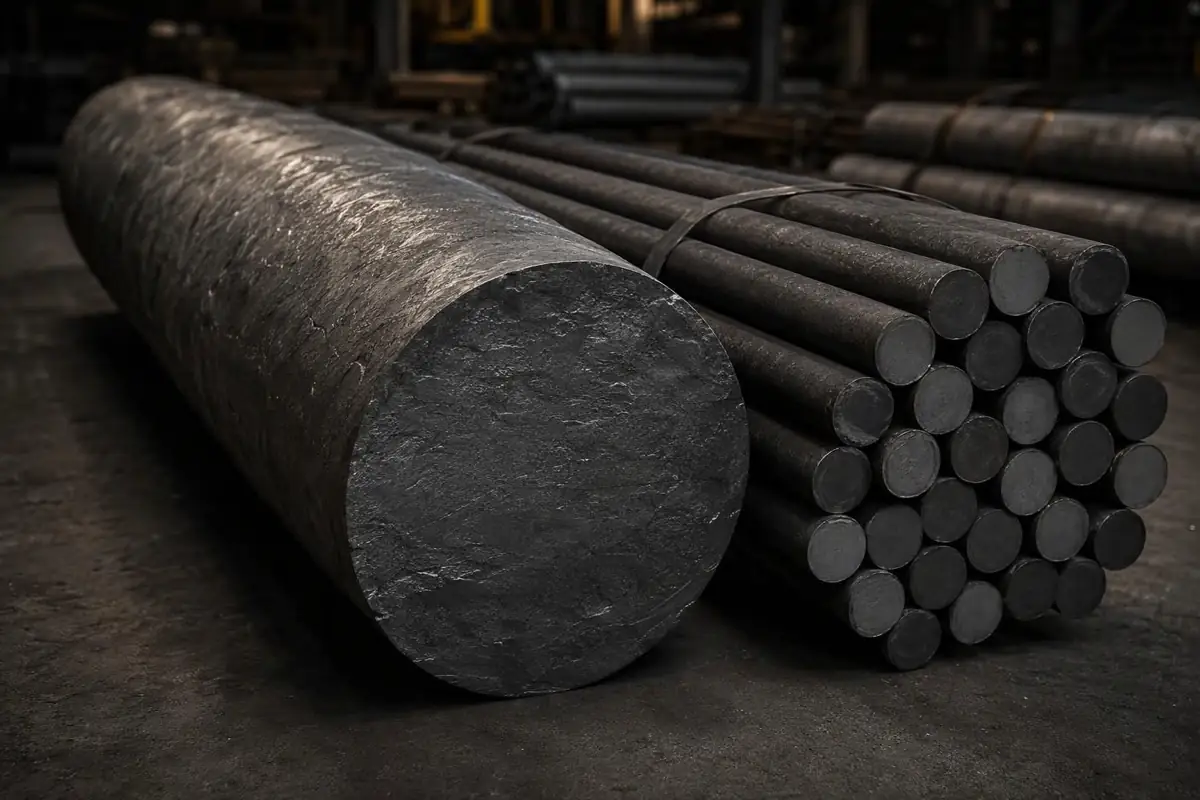
Forged vs Rolled Steel Bar: How to Choose
The same steel grade can be bought as rolled or as forged bar. The difference lies in the production route: reduction ratio, internal soundness, surface, tolerance and cost. We explain which route to choose for which diameter and part, with a worked example and a decision table.
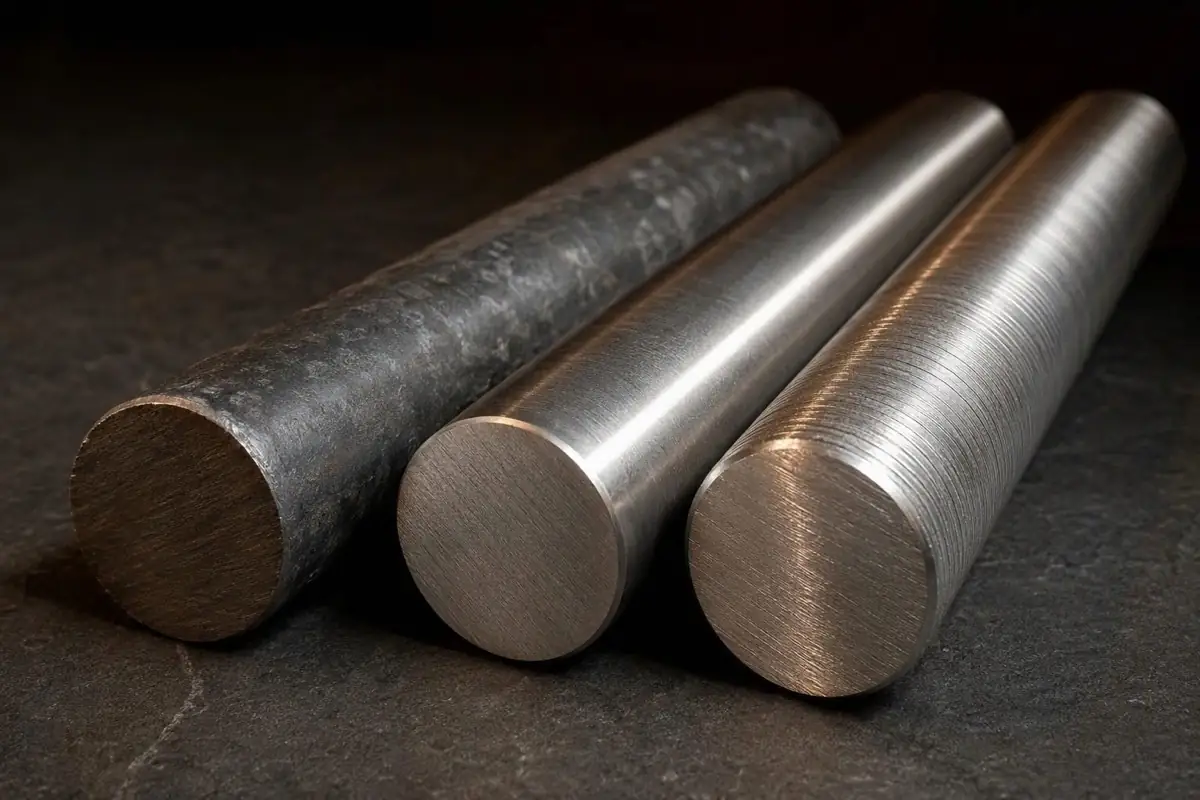
Steel Delivery Condition Codes: What +A, +N, +QT, +C, +SH and +AT Mean
The +A, +N, +QT, +C, +SH and +AT codes after a steel name state the heat-treatment and surface condition in which the material is delivered; hardness, mechanical values and tolerances all depend on them. We explain what each code means, why the order matters in combined codes, and how to choose the right one on an order.