Steelmaking (EAF)
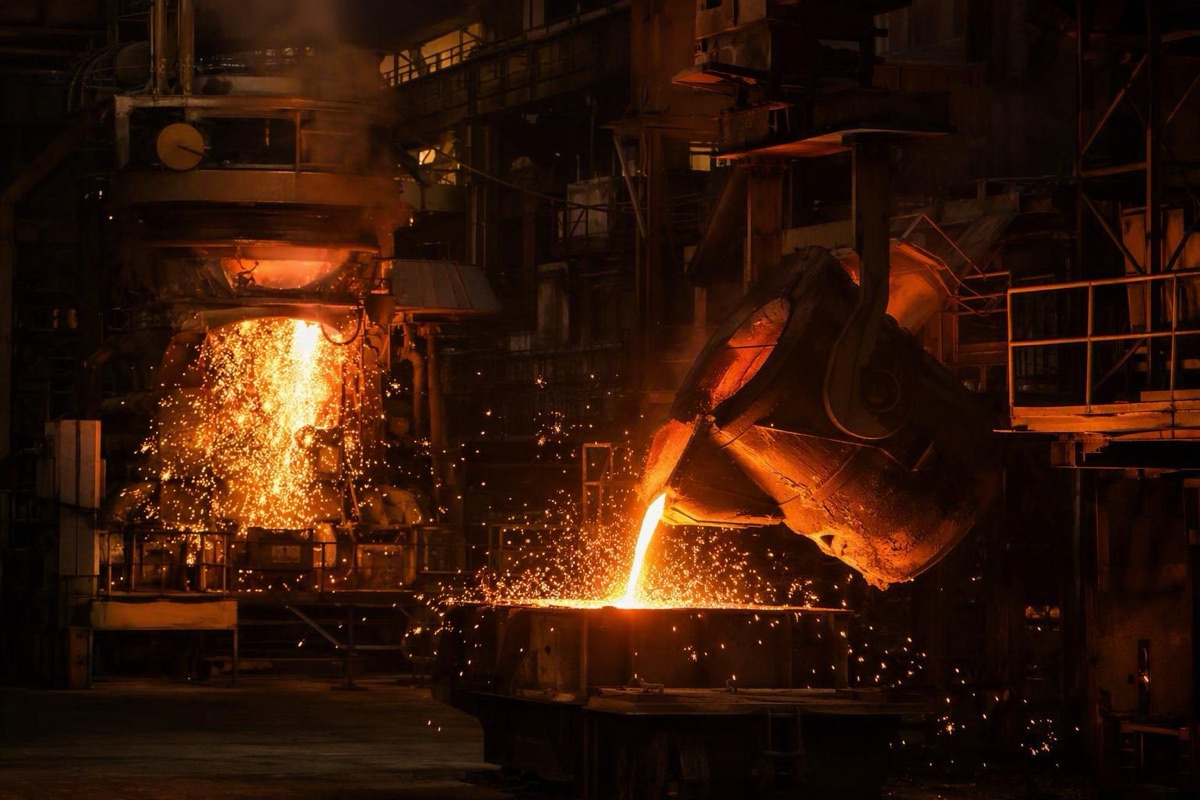
Melting scrap steel at 1600°C in Electric Arc Furnace (EAF), chemical analysis and refining in ladle furnace.
The steelmaking plant is the first and most critical stage of the steel production chain. Using Electric Arc Furnace (EAF) technology, selected scrap steel is melted above 1600°C to produce liquid steel. During this process, arc energy is used to remove all impurities from the scrap and achieve the desired chemical composition.
In the Ladle Furnace (LF) stage, the chemical composition of liquid steel is precisely adjusted. Desulfurization, deoxidation, and addition of alloying elements are carried out at this stage. Thanks to computer-controlled systems, each charge is analyzed with ±0.01% precision.
The Vacuum Degassing (VD) unit removes harmful gases such as hydrogen, nitrogen, and oxygen from liquid steel. This process is critically important, especially in the production of high-quality special steels. In a vacuum environment (0.5–1 mbar), gas levels are reduced to minimum.
The VODC unit is particularly used in the production of stainless and high-alloy steels. By blowing oxygen under vacuum, carbon levels are reduced while chromium loss is minimized. The entire process is monitored and recorded by CNC-controlled systems.
This process is carried out at partner mills across our supply network. Aktif Çelik is responsible for grade selection, conformity to specification, inspection documentation (EN 10204) and shipment follow-up.
Technical Parameters
Steelmaking (EAF) — Key technical data of the process
Equipment & Facilities
- Electric Arc Furnace (EAF) – 15 tons
- Ladle Furnace (LF) – 15 tons
- Vacuum Degassing (VD) Unit
- VODC – Vacuum deoxidation and carbon adjustment
- Optical Emission Spectrometer (OES)
- Computer-controlled process management system
- Dust collection and filter system
Quality Control Points
- Real-time chemical analysis per charge (OES)
- Temperature measurement (continuous thermocouple monitoring)
- Oxygen activity control
- Hydrogen and nitrogen level determination
- Slag analysis and basicity control
- EN 10204 3.1 certificate issuance
Reference Standards
Related Products
Products obtained or used in this production process
Technical Support & Quote
Steelmaking (EAF) — For detailed technical information, capacity details and custom production requests, contact our expert team.
What is a steelmaking plant and how does an electric arc furnace (EAF) work?
A steelmaking plant (melt shop) converts scrap and/or hot metal into liquid steel by melting and refining. In an electric arc furnace, the arc struck between graphite electrodes and the scrap (~3500°C) melts the charge; a ladle furnace (LF) then adjusts chemistry and temperature, with vacuum degassing (VD) where needed. The EAF route is scrap-based and emits far less CO₂ than the integrated blast-furnace + BOF route.
EAF vs BOF and secondary metallurgy
The BOF (basic oxygen furnace) blows oxygen through liquid hot metal — the route of integrated mills. The EAF can run on up to 100% scrap; its flexible capacity and low carbon footprint make it the backbone of special-steel production. Quality is really built in secondary metallurgy: alloying and desulphurization at the ladle furnace, hydrogen/nitrogen removal in the vacuum degasser, inclusion control by calcium treatment. The liquid steel then goes to continuous casting. Chemistry is tracked by spectrometer at every stage, and the heat analysis is recorded in the material certificate (EN 10204 3.1).
Frequently Asked Questions
What is the difference between an EAF and a blast furnace (BOF)?+
An EAF melts scrap with electricity (flexible, low CO₂); the blast furnace + BOF route makes hot metal from ore and converts it with oxygen (large scale, ore-based).
What does the ladle furnace (LF) do?+
It fine-tunes the temperature and chemistry of the melt: alloy additions, desulphurization and inclusion shaping happen there.
Is EAF steel high quality?+
Yes — modern EAF plus ladle metallurgy and vacuum degassing produces high-grade steels including Q&T grades; quality is set by scrap management and secondary metallurgy.
How is quality verified in the melt shop?+
A sample from every heat is analyzed by spectrometer; the heat analysis and mechanical tests are reported in the EN 10204 3.1 certificate.
Related Blog Posts
Technical articles, guides and industry analyses
EAF vs BOF: Electric Arc Furnace vs Basic Oxygen Furnace
We compare the electric arc furnace (EAF) and the basic oxygen furnace (BOF) by energy source, charge material, scale, carbon footprint and typical products.
What Is Annealing of Steel? Types, Temperatures and Uses
What is annealing and why does it soften steel? We explain full, process, stress-relief and spheroidize annealing — their temperatures, mechanisms and the difference from normalizing.
Steel Heat Treatment Processes: Annealing, Quenching & Tempering, Normalizing Guide
A comprehensive guide to steel heat treatment processes. Parameters, suitable steel grades, and proper process selection for annealing, normalizing, quenching & tempering, and case hardening.