
PRODUCTION
PROCESSES
The production stages carried out at partner mills across our supply network: steelmaking, metallurgy, rolling, forging and heat treatment. At every stage we handle grade selection, conformity to specification and inspection documentation.
- Steelmaking (EAF)01
Steelmaking (EAF)
Melting scrap steel in Electric Arc Furnace and producing liquid steel. Controlled melting at 1600°C.
- Electric Arc Furnace (EAF) – 15 tons
- Ladle Furnace (LF) – 15 tons
- Vacuum Degassing (VD) Unit
- Computer-controlled process management
- VODC – Vacuum deoxidation and carbon adjustment unit
- Continuous Casting02
Continuous Casting
Converting liquid steel into billets and blooms on the continuous casting line. Homogeneous internal structure guaranteed.
- Casting in billet and bloom formats
- Homogeneous internal structure and low segregation
- Automatic mold level control
- Electromagnetic stirring system
- Hot Rolling03
Hot Rolling
Passing billets through rolling mills at high temperature to form bars, profiles and flats.
- Bar, profile and flat production
- High-temperature forming
- Automatic dimension control system
- Wide product range
- Forging Press04
Forging Press
Shaping steel hot or cold with hydraulic presses. Production capacity up to 200-1000mm diameter.
- 1700-ton press capacity
- Production in 200–1000 mm diameter range
- Hot and cold forging operations
- High-strength part production
- Cold Drawing05
Cold Drawing
Drawing hot rolled bars through dies for precise tolerances and bright surface finish.
- Precision tolerance production
- Bright surface quality
- Automatic drawing lines
- Production capacity in wide diameter range
- Peeling & Grinding06
Peeling & Grinding
Removing surface defects by turning or grinding. Production in h7-h11 tolerance classes.
- Production in h7-h11 tolerance classes
- High surface quality
- Automatic surface measurement system
- Online quality control
- Heat Treatment07
Heat Treatment
Annealing, quenching & tempering, normalizing and case hardening. Optimizing mechanical properties.
- Annealing, quenching & tempering, normalizing and case hardening
- Temperature control up to 1200°C
- Oil and polymer bath cooling systems
- Fully automatic furnace control
- CNC Machining08
CNC Machining
Precision cutting, turning and milling on computer-controlled machines. ±0.01mm tolerance.
- Machining with ±0.01mm precision
- CNC turning and milling
- Automatic tool changing systems
- Production capacity for complex geometries
- Quality Control & Testing09
Quality Control & Testing
Ultrasonic testing, hardness measurement, spectrometer analysis and dimensional control. 100% inspection.
- Ultrasonic inspection
- Hardness measurement and spectrometer analysis
- Dimensional and surface control
- 100% inspection guarantee
- Packaging & Logistics10
Packaging & Logistics
Jute wrapping, steel strapping. Delivery by container, truck and vessel.
- Jute wrapping and steel strapping
- Delivery by container, truck and vessel
- Marking and traceability system
- International logistics network
- Ferroalloy Production (SAF)11
Ferroalloy Production (SAF)
Ferrochrome, ferromanganese and ferrosilicon production in Submerged Arc Furnace. Carbothermic reduction at 1350–1750°C.
- Submerged Arc Furnace (SAF) – 15–100+ MVA
- Alloy extraction from ore via carbothermic reduction
- Continuous tapping operation
- Energy consumption: 3,000–5,000 kWh/ton
- Pig Iron Production12
Pig Iron Production
Steel pig iron, hematite pig iron and nodular pig iron production in blast furnace and cupola. Each type produced to different purity targets.
- Steel Pig Iron — low P and S, EAF charge material
- Hematite Pig — 3.5–4.5% C, for grey iron casting
- Nodular Pig — max 0.05% Mn, max 0.015% S
- Standard ingot: 10–12 kg notch-free
- Casting Process (Sand/Die)13
Casting Process (Sand/Die)
Sand molding with AFS 30–70 silica sand, FeSiMg nodularization and inoculation. Ductile and grey cast iron production process.
- FeSiMg Sandwich nodularization method
- Ca/Ba/Sr-based inoculants for nodule control
- Induction furnace: 1480–1520°C melting
- Target nodularity: ≥80% (EN 1563)
- Shot Blasting14
Shot Blasting
Sa 2.5 surface preparation with steel shot (S110–S780). Pre-coating cleaning of castings, structures and pipe surfaces.
- ISO 8501-1 Sa 2.5 cleanliness grade
- Steel shot: S110 (0.3mm) – S780 (2.0mm)
- Surface profile: Rz 25–100 µm
- Shot hardness: 40–51 HRC
- Foundry QC & NDT15
Foundry QC & NDT
Spectrometer, microstructure, mechanical testing and NDT (UT, RT, MT, PT). Nodularity ≥80%, ASTM E2567-16 standard.
- OES spectrometer — ppm-level analysis
- ASTM E2567 nodularity measurement
- UT, RT, MT, PT — full NDT capability
- Tensile, hardness and Charpy impact tests
Related Blog Posts
Technical articles, guides and industry analyses
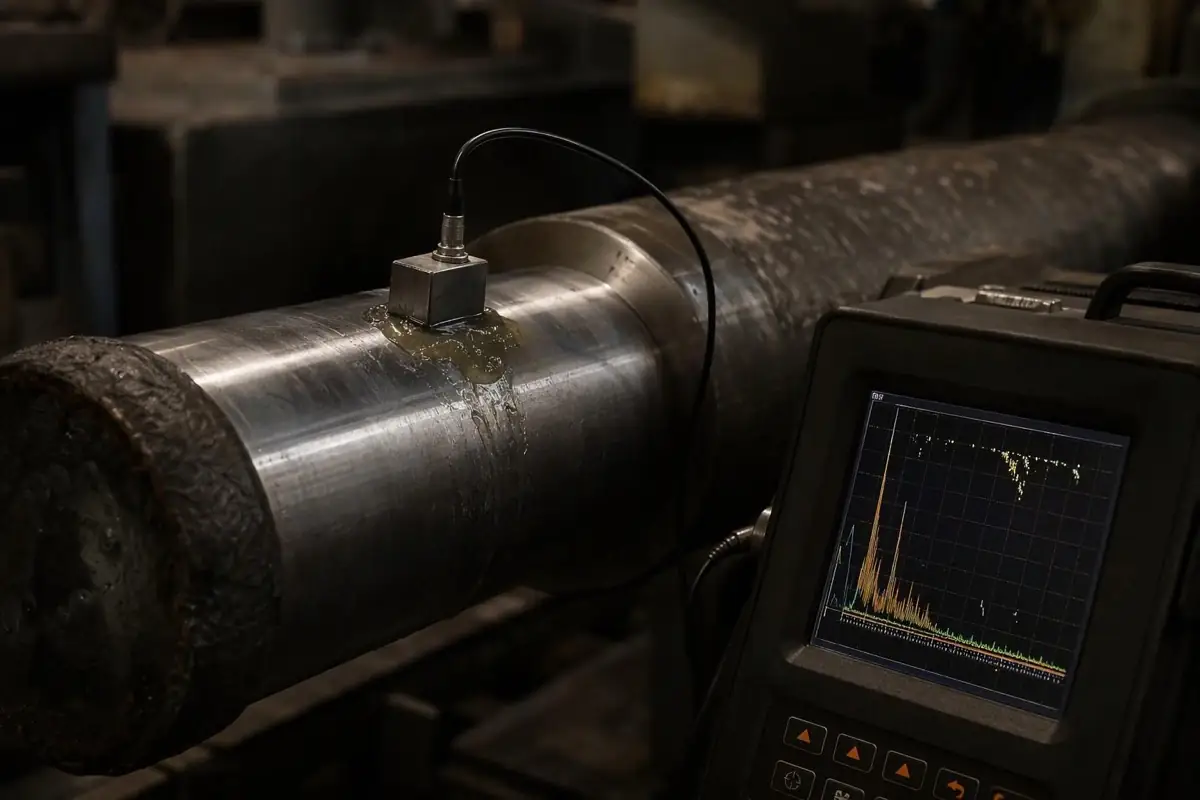
Ultrasonic Testing of Steel Bars and Forgings: EN 10308, EN 10228-3
Ultrasonic testing looks for voids, internal cracks and inclusion clusters inside bars and forgings. We explain when EN 10308 applies to bars, EN 10228-3 to forgings, ASTM A388 to US specifications and SEP 1921 to German drawings, what the test finds and misses, and what to put in the order.
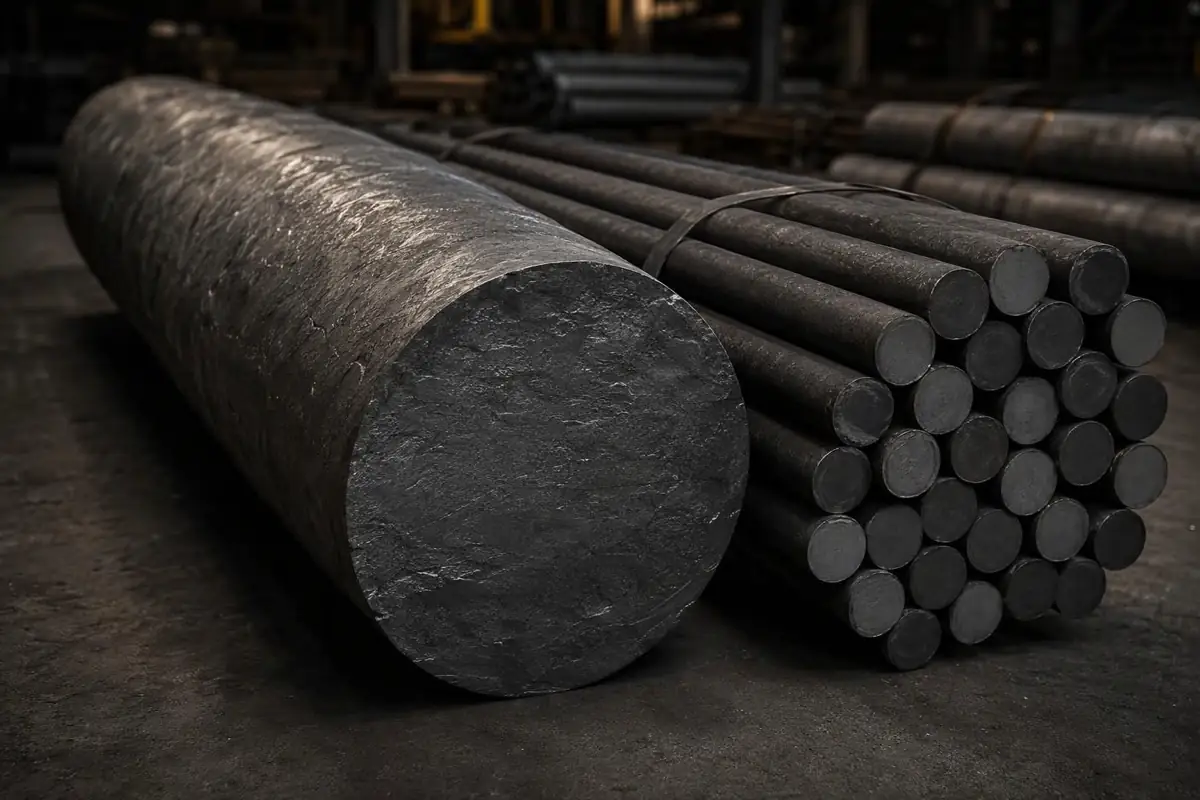
Forged vs Rolled Steel Bar: How to Choose
The same steel grade can be bought as rolled or as forged bar. The difference lies in the production route: reduction ratio, internal soundness, surface, tolerance and cost. We explain which route to choose for which diameter and part, with a worked example and a decision table.
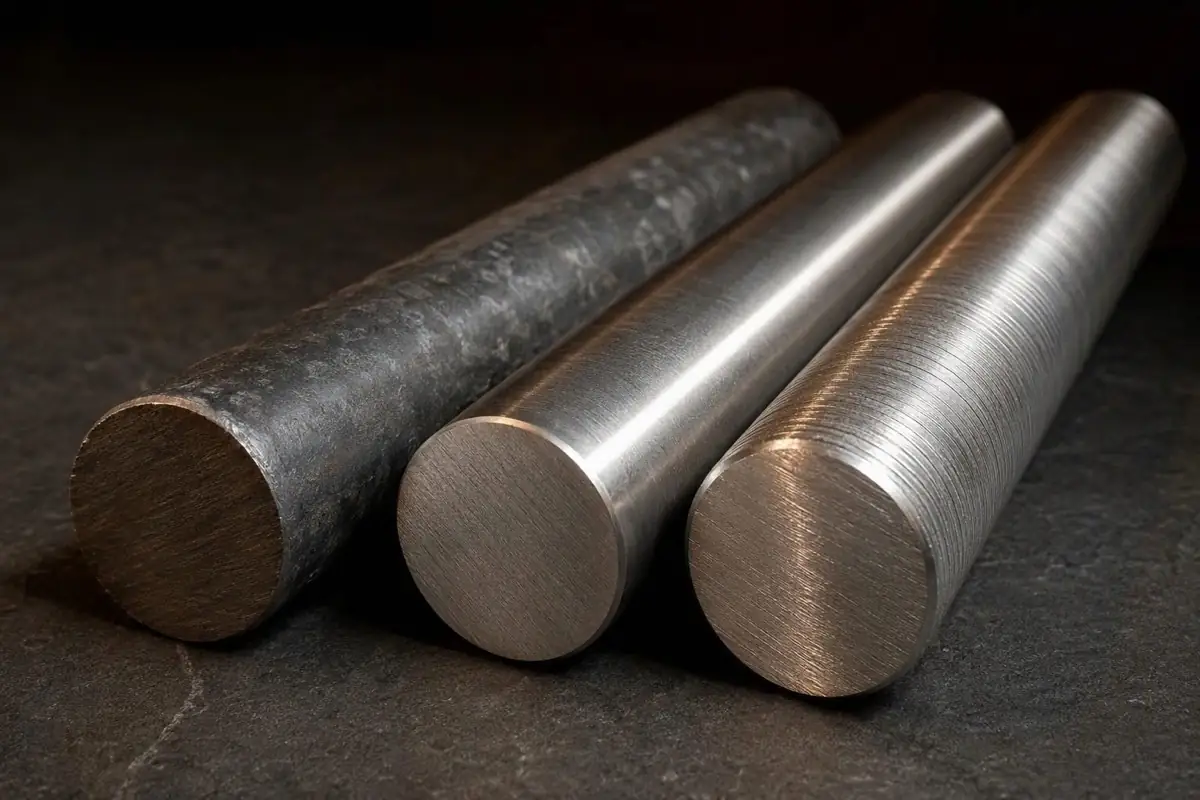
Steel Delivery Condition Codes: What +A, +N, +QT, +C, +SH and +AT Mean
The +A, +N, +QT, +C, +SH and +AT codes after a steel name state the heat-treatment and surface condition in which the material is delivered; hardness, mechanical values and tolerances all depend on them. We explain what each code means, why the order matters in combined codes, and how to choose the right one on an order.