
Ferro Phosphorus
Ferro alloy used as phosphorus additive in steel and cast iron production.
Technical Specifications
Key Features
- High phosphorus content (23-26% P)
- Low sulfur ratio
- Homogeneous grain structure
- Fast melting characteristic
- Stable chemical composition
Applications
- Phosphorus addition in steel production
- Cast iron metallurgy
- Special alloy manufacturing
- Phosphor bronze production
Dimension Table
| Element | Min. | Max. | Typical (indicative) |
|---|---|---|---|
| P | 23 | 26 | 24.5 |
| Si | 0 | 4.0 | 2.0 |
| C | 0 | 0.5 | 0.3 |
| Fe | - | - | Balance |
Technical Notes
- 01Must be stored in dry conditions.
- 02Dosing should be done with precision.
- 03Furnace temperature should be minimum 1500°C.
- 04Add gradually to minimize slag formation.
Ferrophosphorus: a controlled phosphorus addition
Ferrophosphorus is an iron–phosphorus alloy containing roughly a quarter phosphorus, obtained mainly as a by-product of the electric-furnace production of elemental phosphorus. In most steels phosphorus is an impurity to be kept low, so FeP is used only where it is wanted on purpose: rephosphorized free-cutting steels, weathering steels such as S355J0WP to EN 10025-5, phosphorus-strengthened cold-rolled sheet grades in EN 10268, and high-phosphorus cast irons for fluid, thin-walled castings and some railway brake blocks.
Because the target phosphorus content is usually small and the window narrow, the addition is calculated from the steel weight, the phosphorus already in the bath, the alloy analysis and the expected recovery. It is made in the ladle after deoxidation, not under an oxidising furnace slag, where phosphorus would revert to the slag. Lump sizes dissolve quickly, and fines suit cored wire. Each lot should come with an analysis of P, Si, C, Mn and S, sampled to ISO 3713 or an equivalent procedure.
Treat FeP as a deliberate contaminant: keep it in a separate, labelled store and dosing route so that it can never reach heats where phosphorus must be low, store it dry, and record every addition against the heat number. For manganese or silicon deoxidation, see ferromanganese and ferrosilicon.
Related products
What are ferroalloys?
Ferroalloys are master alloys of iron with a high share of an alloying element (Si, Mn, Cr, Mo, V...): e.g.
Ferroalloys: guide and FAQRelated Blog Posts
Technical articles, guides and industry analyses
HS Codes for Steel Products: A 6-Digit Guide
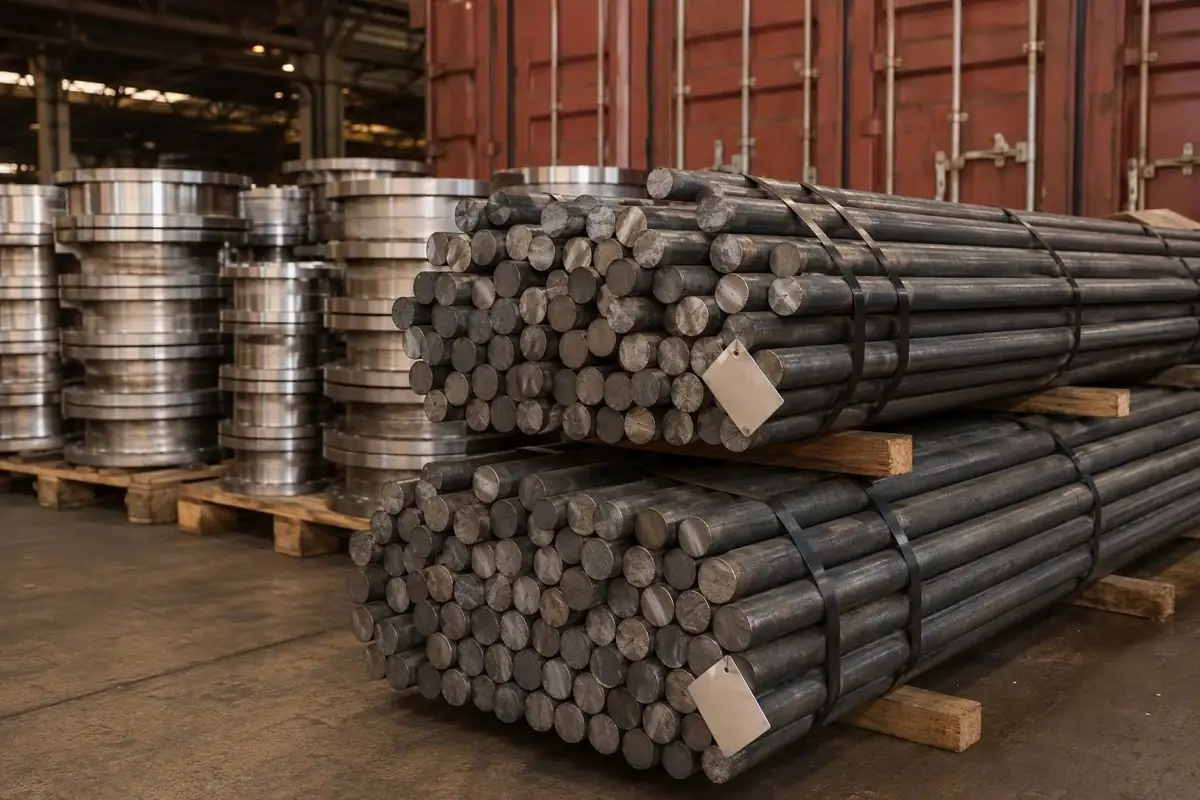
The first six digits of any national tariff code are the World Customs Organization's Harmonized System (HS) code, identical in every country. We collected the 6-digit HS headings for steel bars, flanges, fittings, ferroalloys and cast products, plus the thresholds that decide alloy versus non-alloy steel. Final classification is your customs broker's call.
EAF vs BOF: Electric Arc Furnace vs Basic Oxygen Furnace
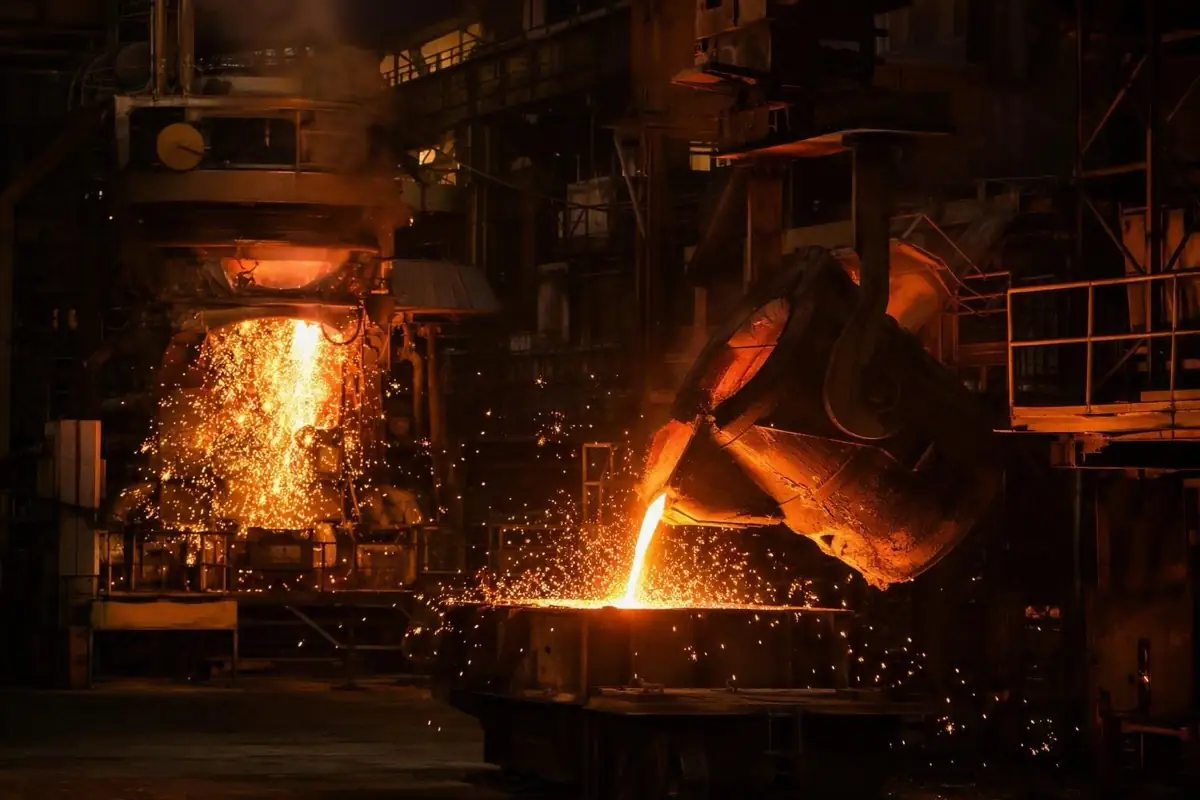
We compare the electric arc furnace (EAF) and the basic oxygen furnace (BOF) by energy source, charge material, scale, carbon footprint and typical products.