
Ferro Silicon Manganese
Combined deoxidation and alloying agent in steel production.
Technical Specifications
Key Features
- Dual function: deoxidation + alloying
- High manganese and silicon content
- Low carbon ratio
- Cost-effective solution
- Fast melting and distribution
Applications
- Deoxidation in steel production
- Low carbon steel manufacturing
- Structural steel production
- Rebar production
- General engineering steels
Dimension Table
| Element | Min. | Max. | Typical (indicative) |
|---|---|---|---|
| Mn | 65 | 68 | 66 |
| Si | 14 | 18 | 16 |
| C | 0 | 2.0 | 1.5 |
| P | 0 | 0.20 | 0.15 |
| S | 0 | 0.03 | 0.02 |
| Fe | - | - | Balance |
Technical Notes
- 01Can be used alone instead of FeMn + FeSi.
- 02Provides cost advantage (single addition).
- 03Can be added in ladle or furnace.
- 04Ideal for standard steel grades.
Silicomanganese: combined Mn–Si deoxidation
Silicomanganese (FeSiMn, SiMn) brings manganese and silicon in one addition and is the workhorse deoxidiser for long products such as rebar, wire rod, sections and merchant bars, as well as for many plate and structural grades. When Mn and Si deoxidise together, the reaction products are liquid manganese silicates, which coalesce and float out more easily than the solid oxides formed by silicon or aluminium alone. That is why Si–Mn killing is preferred for wire rod and other grades where hard alumina inclusions or nozzle clogging must be avoided.
ISO 5447 and ASTM A483 specify the grades, usually designated by their manganese and silicon contents, with limits on carbon, phosphorus and sulphur. Per unit of manganese, silicomanganese carries less carbon than high-carbon ferromanganese, which helps where carbon is restricted, and its silicon replaces part of the ferrosilicon that would otherwise be needed. Check phosphorus on the certificate, since it is not removed in the ladle, and match the lump size to the tapping practice.
The addition is normally made to the ladle during tapping, often with a final trim of low-silicon alloy or aluminium depending on the deoxidation level required. Calculate both elements: the manganese target sets the quantity, and the silicon it brings must stay within the grade's Si range. For manganese alone, see ferromanganese; for silicon alone, ferrosilicon.
Related products
What are ferroalloys?
Ferroalloys are master alloys of iron with a high share of an alloying element (Si, Mn, Cr, Mo, V...): e.g.
Ferroalloys: guide and FAQRelated Blog Posts
Technical articles, guides and industry analyses
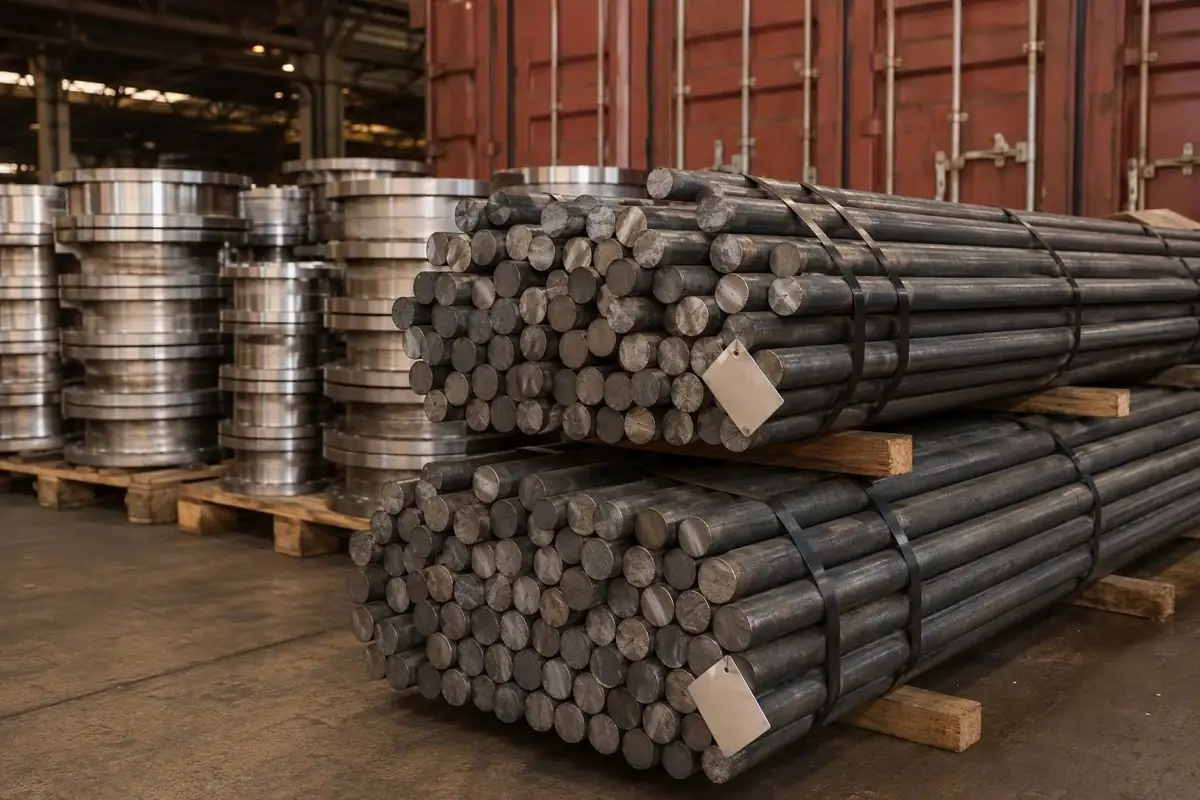
HS Codes for Steel Products: A 6-Digit Guide
The first six digits of any national tariff code are the World Customs Organization's Harmonized System (HS) code, identical in every country. We collected the 6-digit HS headings for steel bars, flanges, fittings, ferroalloys and cast products, plus the thresholds that decide alloy versus non-alloy steel. Final classification is your customs broker's call.
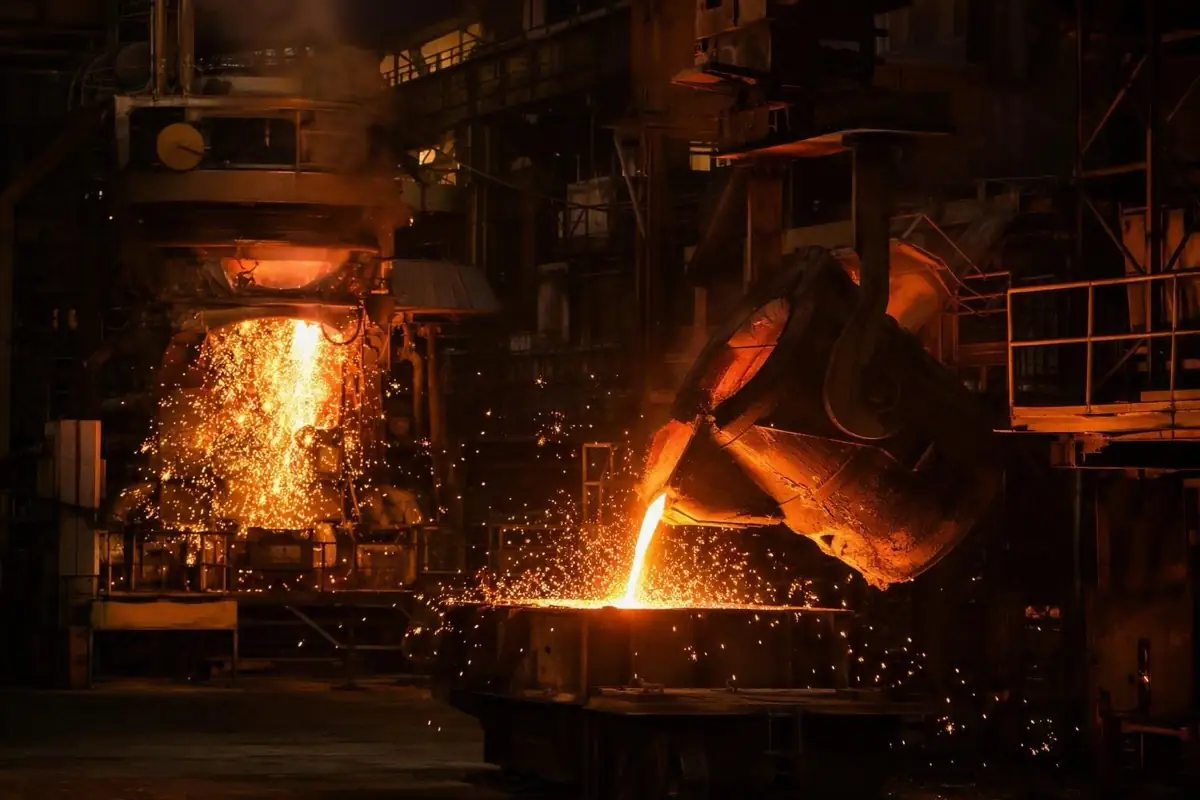
EAF vs BOF: Electric Arc Furnace vs Basic Oxygen Furnace
We compare the electric arc furnace (EAF) and the basic oxygen furnace (BOF) by energy source, charge material, scale, carbon footprint and typical products.