
Slip-On Flange
Cost-effective and easy-to-install solution for general industrial services.
Technical Specifications
Key Features
- Low cost
- Easy installation
- Space-saving
- Fast manufacturing
- Double-side weld joint
- Compact design
Applications
- In-plant piping
- HVAC systems
- Water lines
- Ventilation
- Wastewater treatment
- Pump stations
Dimension Table
| Nominal Size | Outside Diameter (mm) | Thickness (mm) | Bolt Circle (mm) | No. of Bolts | Bolt Size |
|---|---|---|---|---|---|
| 1/2" | 89 | 11 | 60.3 | 4 | 1/2" |
| 1" | 108 | 14 | 79.4 | 4 | 1/2" |
| 2" | 152 | 19 | 120.7 | 4 | 5/8" |
| 4" | 229 | 24 | 190.5 | 8 | 5/8" |
| 8" | 343 | 28 | 298.5 | 8 | 3/4" |
Technical Notes
- 01Inner fillet weld for sealing, outer fillet weld for strength.
- 02Pipe OD tolerances are critical.
- 03Post-weld internal cleaning is important.
Slip-on flange: where it fits and how it is welded
A slip-on flange is pushed over the pipe end and attached with two fillet welds, one outside at the hub and one inside at the mouth of the bore. The pipe end is set back from the flange face so the internal weld does not reach the gasket seating surface. Because the pipe only has to be cut square rather than precisely bevelled, fit-up is quicker and positioning tolerances are more forgiving than with butt-welded flanges.
ASME B16.5 lists hubbed slip-on flanges for NPS 1/2 to 24; EN 1092-1 covers the plate version as Type 01 and the hubbed version as Type 12. Usual materials are ASTM A105 and A350 LF2 in carbon steel and A182 F304L or F316L in stainless steel, mostly with a raised face (RF). They are common on cooling water, fire water, utility air and low-pressure process lines.
The two fillet welds give the joint lower fatigue resistance than a weld neck, so designers avoid slip-ons where severe thermal cycling, strong vibration or high pressure is expected. Check that the bore matches the actual pipe outside diameter, because an oversized gap enlarges the welds. On critical lines the alternative is the weld neck flange; to close a slip-on line permanently, use a blind flange of the same class.
Related products
Grade datasheets
Chemistry, mechanical properties and equivalents of the steel grades used for this product:
Grade comparisons
What is a weld neck flange?
A weld neck flange has a long tapered hub that is butt-welded to the pipe.
Flanges: guide and FAQGet a Quote
Contact our expert team for pricing and delivery information on this flange type.
Get a QuoteRelated Blog Posts
Technical articles, guides and industry analyses
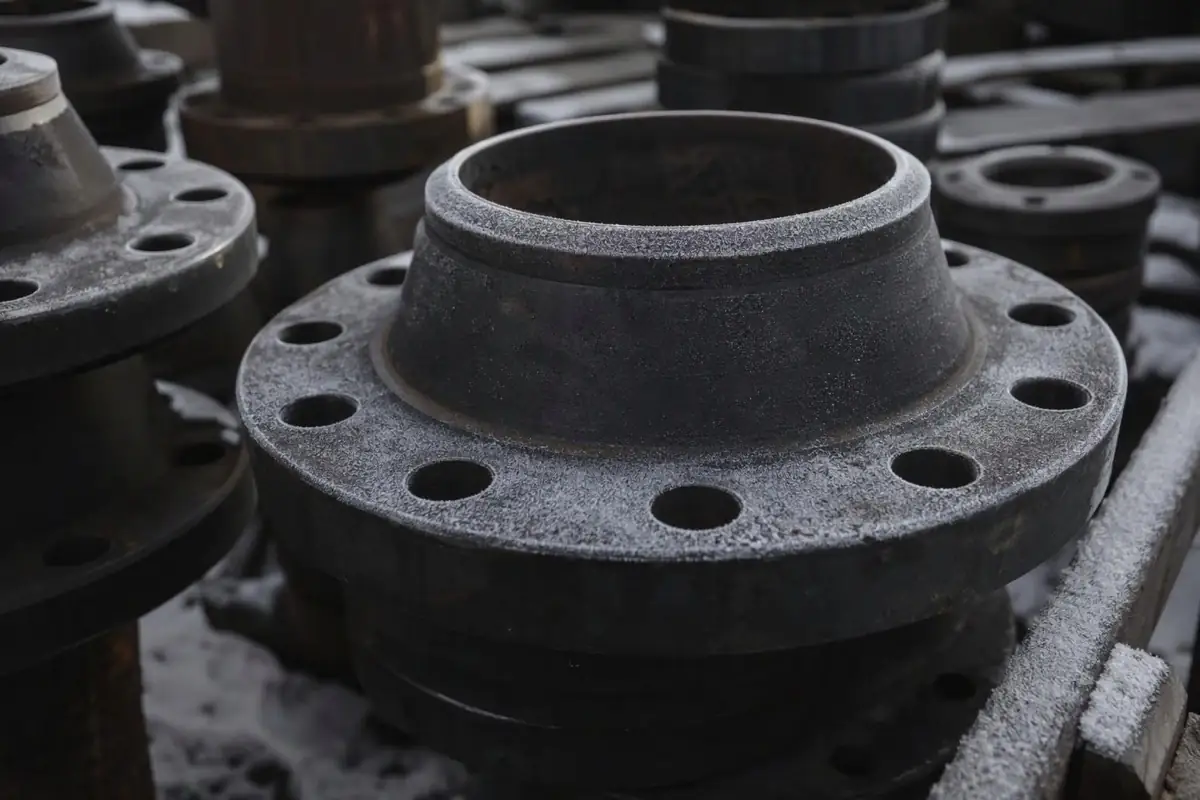
A105 vs A350 LF2: Which Flange Material for Low Temperatures?
A105 and A350 LF2 are two forged carbon steels of the same strength; the real difference is impact testing. LF2 Class 1 is guaranteed by a notch impact test at −46 °C, while A105 has no mandatory impact test. Chemistry and mechanical table, the window that meets both standards, and a flange–pipe–fitting set by design temperature.
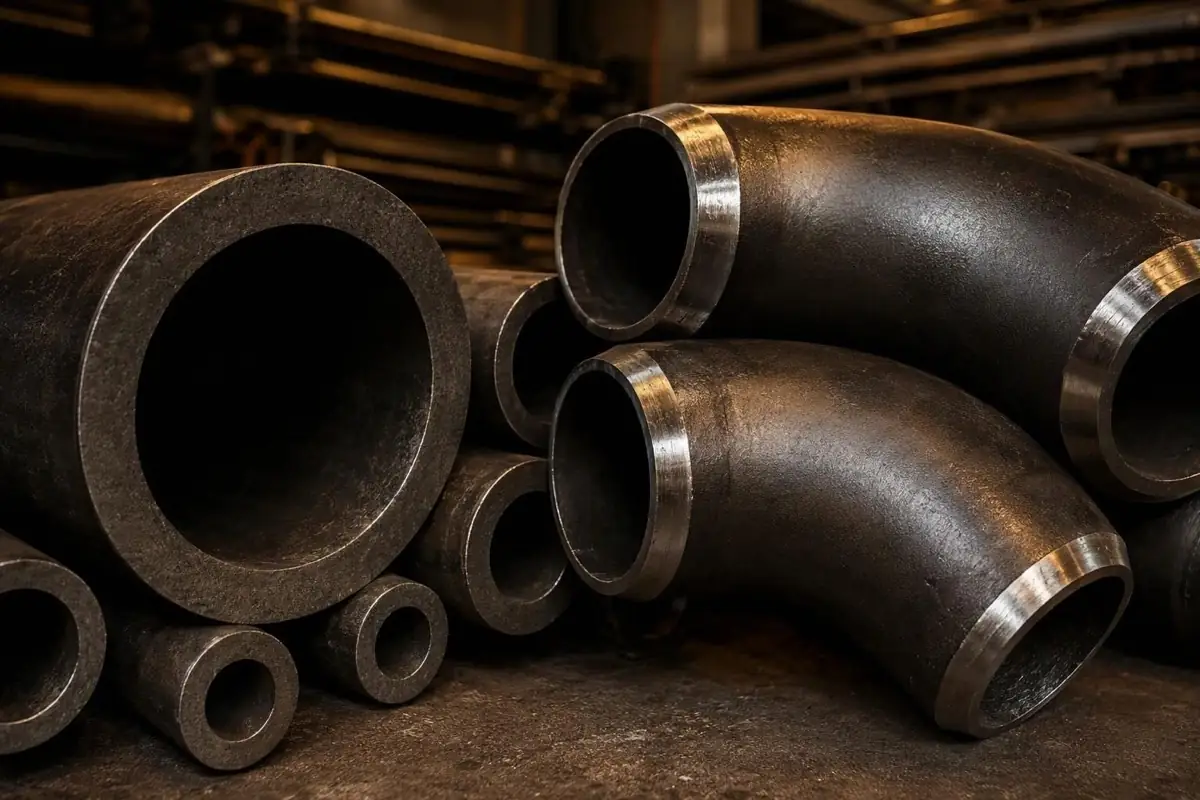
Matching Fittings and Flanges to Pipe Schedule: SCH 80, SCH 160, XXS
Schedule is the pipe's wall thickness; fittings and flanges carry the same information in different ways. On butt-weld fittings the schedule follows the pipe, on socket-weld and threaded fittings the class does, and on weld neck flanges the bore does. We put the matching rules for SCH 160 and XXS lines and our calculated weight table in one place.