Fittings / 90°
90° Elbow
Standard solution for 90-degree direction change in piping systems.
Technical Specifications
Key Features
- Low flow loss
- Smooth inner surface
- Easy installation
- High pressure resistance
- Long radius design
- Standard dimensions
Applications
- Pipe direction changes
- Mechanical piping
- Process lines
- HVAC systems
- Water pipelines
- Industrial installations
Dimension Table
| Size | Outside Diameter (mm) | Thickness (mm) | Center to End (mm) | Radius (mm) |
|---|---|---|---|---|
| 1/2" | 21.3 | 2.77 | 38 | 76 |
| 1" | 33.4 | 3.38 | 51 | 102 |
| 2" | 60.3 | 3.91 | 76 | 152 |
| 4" | 114.3 | 6.02 | 152 | 305 |
| 8" | 219.1 | 8.18 | 305 | 610 |
| 12" | 323.9 | 10.31 | 457 | 914 |
Technical Notes
- 01Available in Long Radius (LR) and Short Radius (SR) types.
- 02Use long radius elbows to minimize flow loss.
- 03Proper beveling is required before welding.
What are pipe fittings?
Pipe fittings are the components that change direction, branch, reduce or terminate a pipeline: elbows (90°/45°), tees, reducers, caps and crosses. Butt-weld fittings are produced to ASTM A234 / EN 10253 material specs and ASME B16.9 dimensions, in sizes from 1/2" to 48".
Elbow types and connection methods
The most used fitting is the elbow: made in 90° and 45° angles, long radius (LR, radius = 1.5 × diameter) and short radius (SR, radius = 1 × diameter). LR elbows are standard because they give lower pressure drop and turbulence; SR elbows serve tight layouts. By connection method there are three families: butt-weld (ASME B16.9 — larger bores), socket-weld and threaded (ASME B16.11 — typically below 2"). The material range covers carbon steel (A234 WPB), alloy (WP11/WP22/WP91), stainless (A403) and low-temperature (A420) grades. All products ship with 3.1 certificates and full traceability.
Frequently Asked Questions
What does ASTM A234 WPB mean?+
A234 is the material spec for wrought carbon and alloy steel fittings for moderate and elevated temperature service; WPB is the most common carbon steel grade (W=weldable, P=pressure, B=grade B).
Long radius (LR) vs short radius (SR) elbow?+
An LR elbow has a bend radius of 1.5 × diameter, an SR elbow 1 × diameter. LR gives less pressure drop and erosion; SR is chosen only where space is tight.
Where are butt-weld, socket-weld and threaded fittings used?+
Butt-weld (B16.9) on larger-bore main lines; socket-weld and threaded (B16.11) typically below 2", on small-bore, instrument and utility lines.
How do EN 10253 and ASME B16.9 relate?+
Both are butt-weld fitting standards: B16.9 is the American system, EN 10253 the European one. The project specification determines which system sets dimensions and materials.
Related Blog Posts
Technical articles, guides and industry analyses
Steel Material Selection Guide for Petrochemical Plants
A guide to selecting the right steel material for petrochemical and refinery plants. Step-by-step material determination based on temperature, pressure, corrosion mechanisms, and ASTM standards.
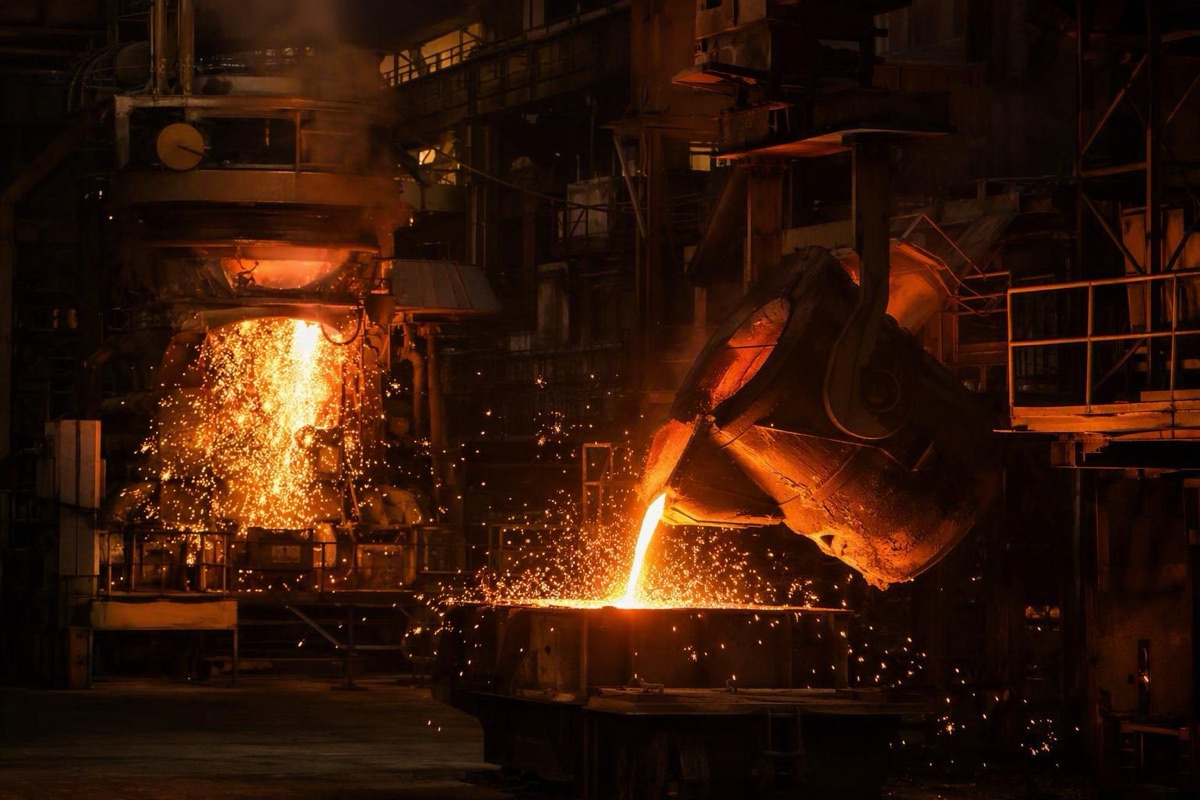
EAF vs BOF: Electric Arc Furnace vs Basic Oxygen Furnace
We compare the electric arc furnace (EAF) and the basic oxygen furnace (BOF) by energy source, charge material, scale, carbon footprint and typical products.