Threadolet - Threaded Outlet
Threaded outlet enabling quick installation without welding.
Technical Specifications
Key Features
- Threaded (NPT/BSPT)
- No welding required
- Quick installation
- Compact design
- Easy maintenance
- Economical
Applications
- Low-pressure systems
- Temporary piping
- Maintenance taps
- Instrumentation
- Small lines
- Plumbing
Design Features
- NPT or BSPT thread
- Reinforced body
- Compact and lightweight
- Ease of assembly
- High strength
- Test-certified
Connection Performance
Dimensions follow the standard or drawing specified in the order — sent with the quote.
Technical Notes
- 01Use proper thread sealant.
- 02Thread quality inspection is key.
- 03Beware in vibrating environments.
- 04Periodic re-tightening may be needed.
Threadolet: a threaded outlet on a welded run
A threadolet combines a welded attachment to the run pipe with a female threaded outlet. The base is welded onto the run like other olets, and the branch connection is made by screwing in a threaded pipe, nipple, plug, thermowell or gauge. Instruments and small valves can therefore be fitted or removed without any hot work on the branch side.
Threadolets are made to MSS SP-97 in Class 3000 and 6000, with NPT threads to ASME B1.20.1 as standard and BSPT to ISO 7-1 where required. Branch sizes are usually NPS 1/8 to 2. The material follows the run pipe: ASTM A105, A350 LF2, A182 F304L/F316L or Cr-Mo grades such as A182 F11 and F22.
Threaded joints are sensitive to vibration and thermal cycling, and many piping specifications restrict them in flammable, toxic or high-temperature service or require a seal weld. Protect the threads while welding the base and check them after cooling. For permanent small branches the socket-weld sockolet, and for a ready-made nipple outlet the nipolet, are the alternatives.
What are branch connection (olet) fittings?
Olet-type branch connection fittings are forged components that create a reinforced branch outlet from a run pipe without using a tee.
Branch Outlets (Olets): guide and FAQRelated Blog Posts
Technical articles, guides and industry analyses
A105 vs A350 LF2: Which Flange Material for Low Temperatures?
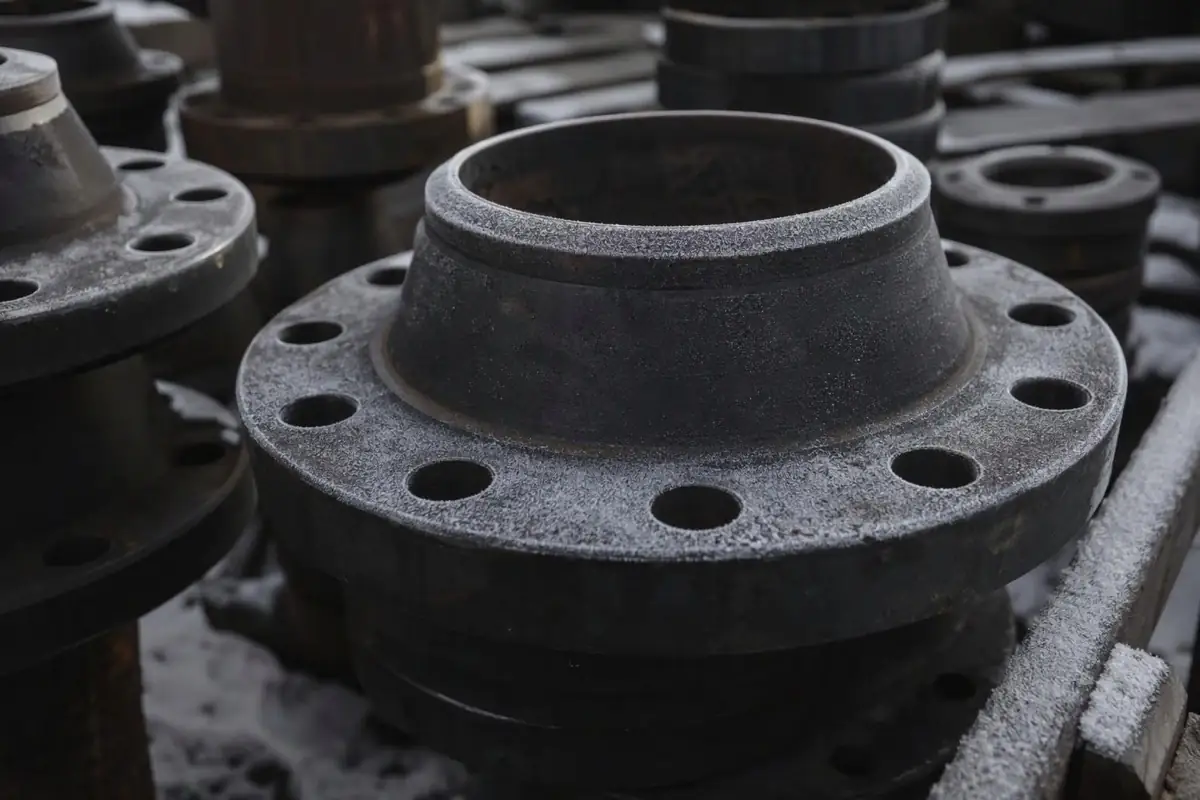
A105 and A350 LF2 are two forged carbon steels of the same strength; the real difference is impact testing. LF2 Class 1 is guaranteed by a notch impact test at −46 °C, while A105 has no mandatory impact test. Chemistry and mechanical table, the window that meets both standards, and a flange–pipe–fitting set by design temperature.
Matching Fittings and Flanges to Pipe Schedule: SCH 80, SCH 160, XXS
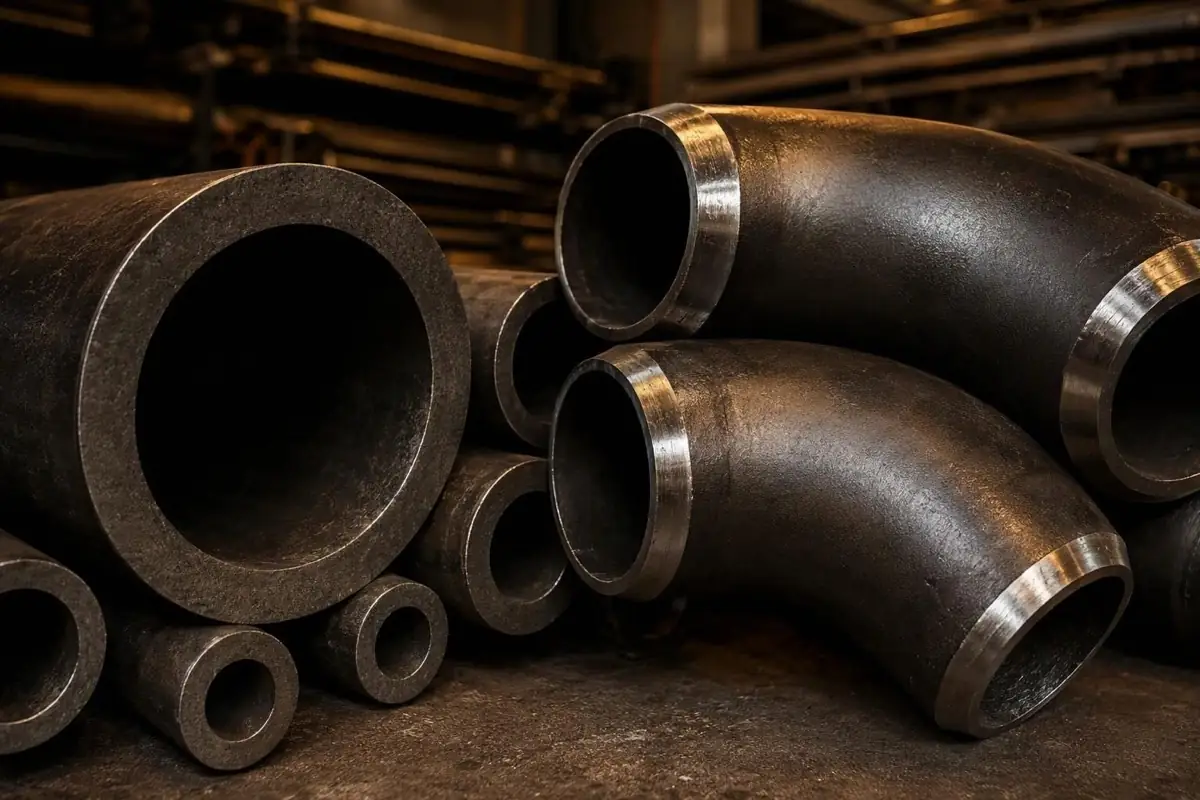
Schedule is the pipe's wall thickness; fittings and flanges carry the same information in different ways. On butt-weld fittings the schedule follows the pipe, on socket-weld and threaded fittings the class does, and on weld neck flanges the bore does. We put the matching rules for SCH 160 and XXS lines and our calculated weight table in one place.