
Hemispherical Head
Hemi-spherical form delivering the highest pressure capability with the most uniform stress distribution.
Technical Specifications
End / Connection Types
Key Features
- Hemispherical form
- Maximum pressure rating
- Uniform stress distribution
- Minimum material for strength
- High temperature capable
- For critical services
Applications
- Ultra high pressure
- Nuclear facilities
- Aerospace
- Research reactors
- Critical processes
- Special duty
Design Features
- Hemispherical geometry
- Maximum pressure strength
- Optimized thickness
- Very high temperature range
- Special welding procedures
- Critical design rules
Pressure Performance
Dimensions follow the standard or drawing specified in the order — sent with the quote.
Technical Notes
- 01Delivers the highest pressure capacity.
- 02Designed to ASME VIII Div.2.
- 03Requires special fabrication and NDT.
- 04Suited for critical services.
Other Types
Hemispherical head: the thinnest wall for the highest pressure
A hemispherical head is half a sphere, with a depth equal to its radius. Because a sphere carries pressure in pure membrane tension, its required thickness under ASME VIII Division 1 (UG-32) is about half that of a cylindrical shell of the same diameter. That makes it the head of choice for high-pressure vessels, gas storage spheres and bullets, high-pressure reactors and separators, autoclaves, and large-diameter equipment where saving thickness also saves forming, welding and heat-treatment cost.
Its depth is the drawback: a hemisphere needs far more forming than other heads. Small and medium sizes are pressed or spun from a single blank, while large heads are assembled from pressed petals and a crown welded together, with each seam examined as the code requires. Since the head is thinner than the shell, the joint between them needs a taper of at least 3:1 on the thicker part (ASME VIII-1, UW-9 and UG-32); EN 13445-3 contains equivalent rules. Material follows the shell: SA-516 Gr 70 or P355GH, impact-tested grades for low temperature, Cr-Mo SA-387 for hot hydrogen service, and stainless, nickel alloys or clad plate for corrosive duties.
When ordering, specify the inside or outside radius, minimum thickness after forming, the petal layout if segmented construction is acceptable, weld-joint category and NDT extent, heat treatment, and the transition detail to the shell. At moderate pressure a 2:1 ellipsoidal head is both shorter and cheaper to make.
Related products
What is a torispherical head (dished end)?
A torispherical head is a dished end that closes pressure vessels, tanks and pipelines.
Caps & Heads: guide and FAQRelated Blog Posts
Technical articles, guides and industry analyses
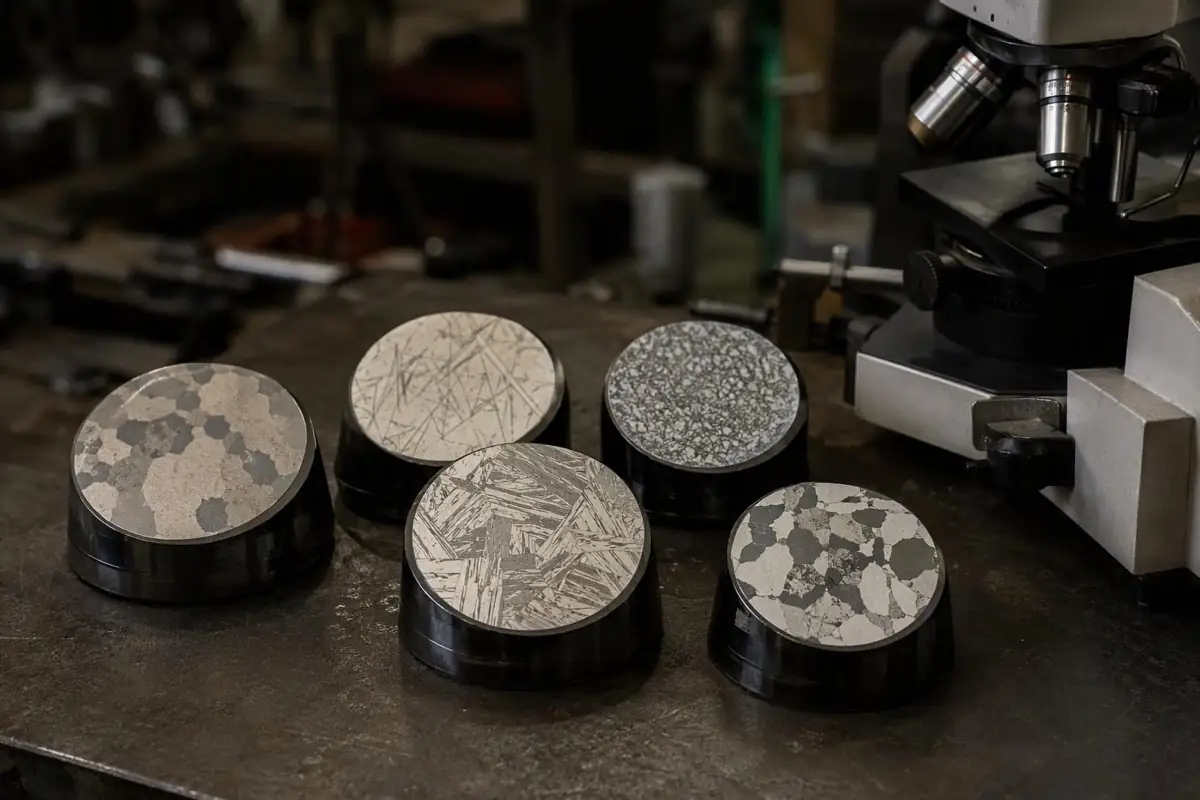
Steel Cleanliness: How ISO 4967 Rates Non-Metallic Inclusions
Steel cleanliness measures the type, size and amount of oxide, sulphide and silicate inclusions in steel. We explain the A, B, C, D and DS types and methods A and B of ISO 4967, how it differs from ASTM E45 and EN 10247, and what to write in the specification for bearing steels or fatigue-loaded shafts.
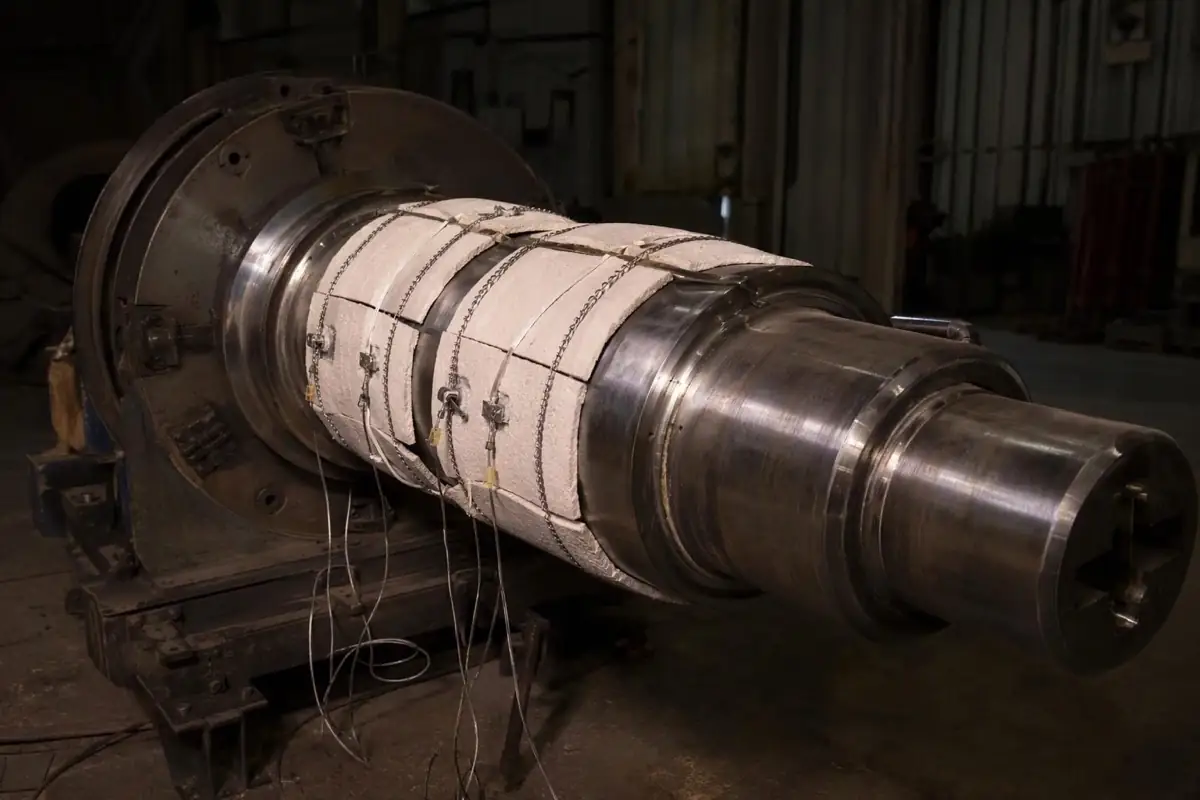
Welding 42CrMo4: Preheat, Interpass and PWHT for Q&T Steels
42CrMo4 and other quenched and tempered steels can be welded, but only under conditions: preheat, low-hydrogen consumables, controlled interpass temperature and post-weld heat treatment. The rule most often missed: on a quenched and tempered part, PWHT must not exceed the tempering temperature of the material. Datasheet values, the EN 1011-2 calculation and a work-order checklist.