
Flat Pipe End Cap
Flat faced end cap for closing pipe runs and setting test points in pressurized systems.
Technical Specifications
End / Connection Types
Key Features
- Flat face geometry
- Easy installation
- Cost-effective
- Standard sizes
- High pressure rating
- Weld compatibility
Applications
- Pipe end closure
- Test points
- Future expansion
- Maintenance covers
- Plumbing
- Ventilation
Design Features
- Flat face geometry
- Beveled weld ends
- Standard thickness
- Smooth inner surface
- Concentric build
- Pressure test ready
Pressure Performance
Dimension Table
| Size | Outside Diameter (mm) | Thickness (mm) | Length (mm) |
|---|---|---|---|
| 1/2" | 21.3 | 2.77 | 25 |
| 1" | 33.4 | 3.38 | 38 |
| 2" | 60.3 | 3.91 | 38 |
| 4" | 114.3 | 6.02 | 64 |
| 8" | 219.1 | 8.18 | 102 |
| 12" | 323.9 | 10.31 | 152 |
| 16" | 406.4 | 12.70 | 178 |
Technical Notes
- 01Used in low-to-medium pressure duties.
- 02Weld quality is critical.
- 03Verify internal pressure calculations.
- 04Periodic inspection recommended.
Flat end cap: a plain closure for small bores and low pressure
A flat cap closes a pipe end with a flat face instead of a dished one. In small bores the flat-ended cap is the normal form: forged socket-weld and threaded caps to ASME B16.11 (Class 3000 and 6000) close vents, drains, instrument stubs and dead legs up to NPS 4. In larger sizes a flat closure, usually a plate welded into or onto the pipe end, is used on low-pressure lines and ducts, as a temporary test end, or where a line is left for future extension.
A flat plate carries pressure in bending rather than in membrane tension, so for the same diameter and pressure it must be much thicker than a dished cap. The required thickness of a welded flat closure is calculated with the flat-head rules of the governing code: ASME B31.3 (paragraph 304.4, which refers to ASME VIII Division 1, UG-34) or EN 13480-3 / EN 13445-3. The result also depends on the attachment detail, because the weld type sets the edge-restraint factor. Material follows the pipe: ASTM A105 or A350 LF2 forgings, A516 Gr 70 or P265GH plate, and A182/A240 304L/316L for stainless.
A flat cap suits tight spaces and ends that will be cut back later. Where the line runs at higher pressure and the closure is permanent, an ASME B16.9 butt-weld cap is lighter and easier to weld and inspect; if the end must be opened, a blind flange is the better choice. When ordering, give pipe size and schedule, pressure, end connection and material.
Related products
What is a torispherical head (dished end)?
A torispherical head is a dished end that closes pressure vessels, tanks and pipelines.
Caps & Heads: guide and FAQRelated Blog Posts
Technical articles, guides and industry analyses
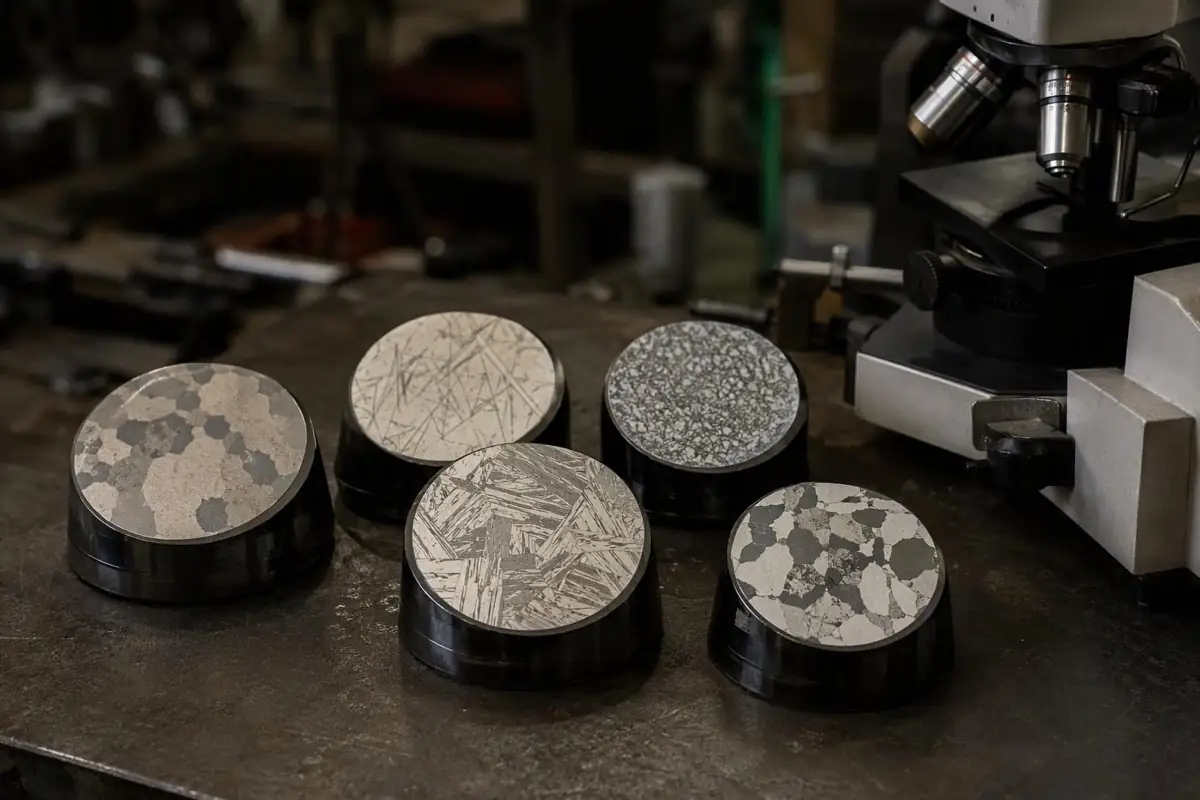
Steel Cleanliness: How ISO 4967 Rates Non-Metallic Inclusions
Steel cleanliness measures the type, size and amount of oxide, sulphide and silicate inclusions in steel. We explain the A, B, C, D and DS types and methods A and B of ISO 4967, how it differs from ASTM E45 and EN 10247, and what to write in the specification for bearing steels or fatigue-loaded shafts.
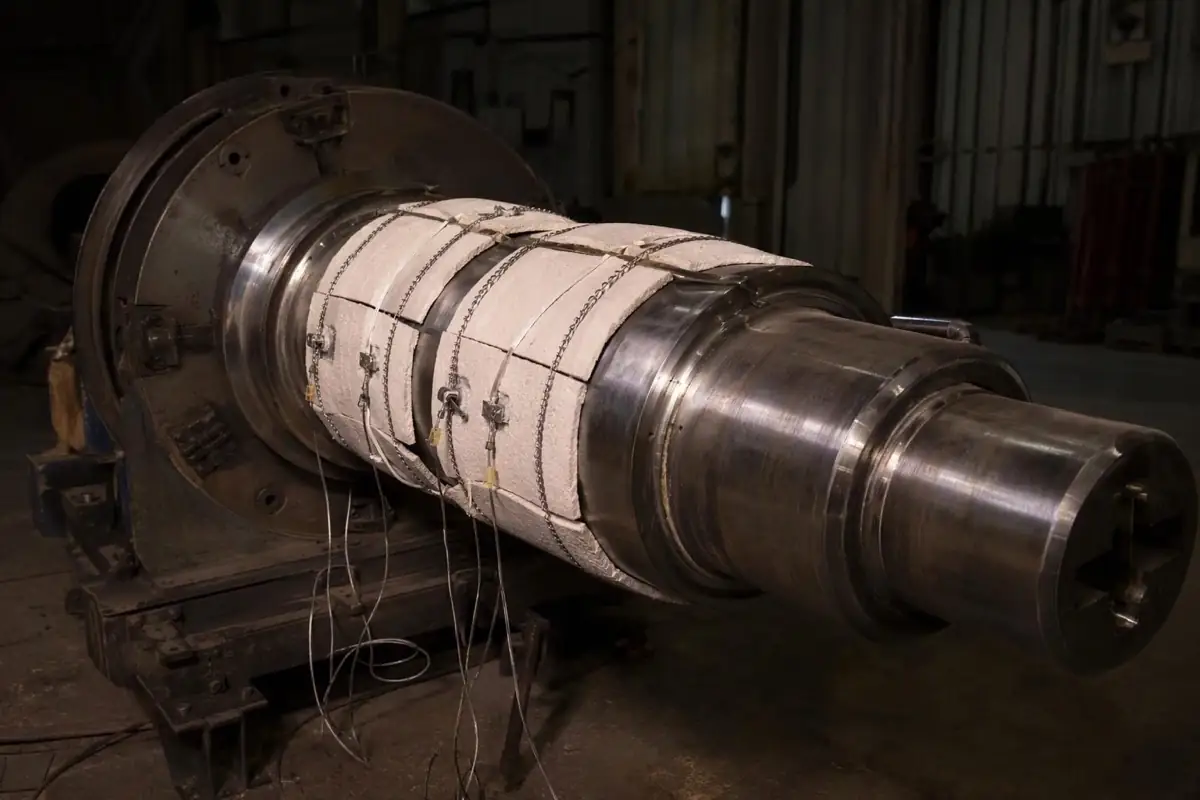
Welding 42CrMo4: Preheat, Interpass and PWHT for Q&T Steels
42CrMo4 and other quenched and tempered steels can be welded, but only under conditions: preheat, low-hydrogen consumables, controlled interpass temperature and post-weld heat treatment. The rule most often missed: on a quenched and tempered part, PWHT must not exceed the tempering temperature of the material. Datasheet values, the EN 1011-2 calculation and a work-order checklist.