Ellipsoidal Head (2:1)
2:1 elliptical geometry head providing efficient stress distribution for pressure vessels.
Technical Specifications
End / Connection Types
Key Features
- 2:1 elliptical geometry
- Optimized stress distribution
- High efficiency
- Lightweight design
- Wide application range
- Standard ratio
Applications
- High-pressure vessels
- Chemical reactors
- Process tanks
- Pressurized storage
- Aerospace
- Special equipment
Design Features
- 2:1 ellipse ratio
- Optimized stress
- Lightweight
- High-temperature capable
- Weld compatible
- Code compliant
Pressure Performance
Dimensions follow the standard or drawing specified in the order — sent with the quote.
Technical Notes
- 012:1 ellipse ratio is standard.
- 02Excellent stress distribution.
- 03Thickness can be optimized.
- 04Delivers high-pressure performance.
Other Types
2:1 ellipsoidal head: the same thickness as the shell
A 2:1 ellipsoidal head has an inside depth equal to a quarter of its inside diameter, so the major and minor axes of its profile are in a 2:1 ratio. The shape keeps knuckle stresses low enough that, under ASME VIII Division 1 (UG-32), the required thickness of a seamless 2:1 head is practically the same as that of the cylindrical shell it closes. That makes it the usual choice for vessels from moderate to high pressure: reactors, columns, air and gas receivers, heat-exchanger channels and filter housings.
The code also accepts a torispherical approximation with a crown radius of 0.9 D and a knuckle radius of 0.17 D, which many head makers produce on standard tooling. In Europe the head is designed to EN 13445-3; typical materials are P265GH and P355GH to EN 10028-2, SA-516 Gr 60/70 under ASME, SA-240 304L/316L for stainless and SA-387 Gr 11/22 for Cr-Mo service. Cold-formed carbon-steel heads may need heat treatment after forming when the forming strain exceeds the limits of UCS-79.
Order on the correct basis: inside or outside diameter, nominal thickness and minimum thickness after forming (the knuckle thins during pressing), straight-flange length and edge bevel. Ask for a thickness survey and a shape check after forming. For higher pressure with less material, see the hemispherical head; for low-pressure tanks, the torispherical head is the more economical option.
Related products
What is a torispherical head (dished end)?
A torispherical head is a dished end that closes pressure vessels, tanks and pipelines.
Caps & Heads: guide and FAQRelated Blog Posts
Technical articles, guides and industry analyses
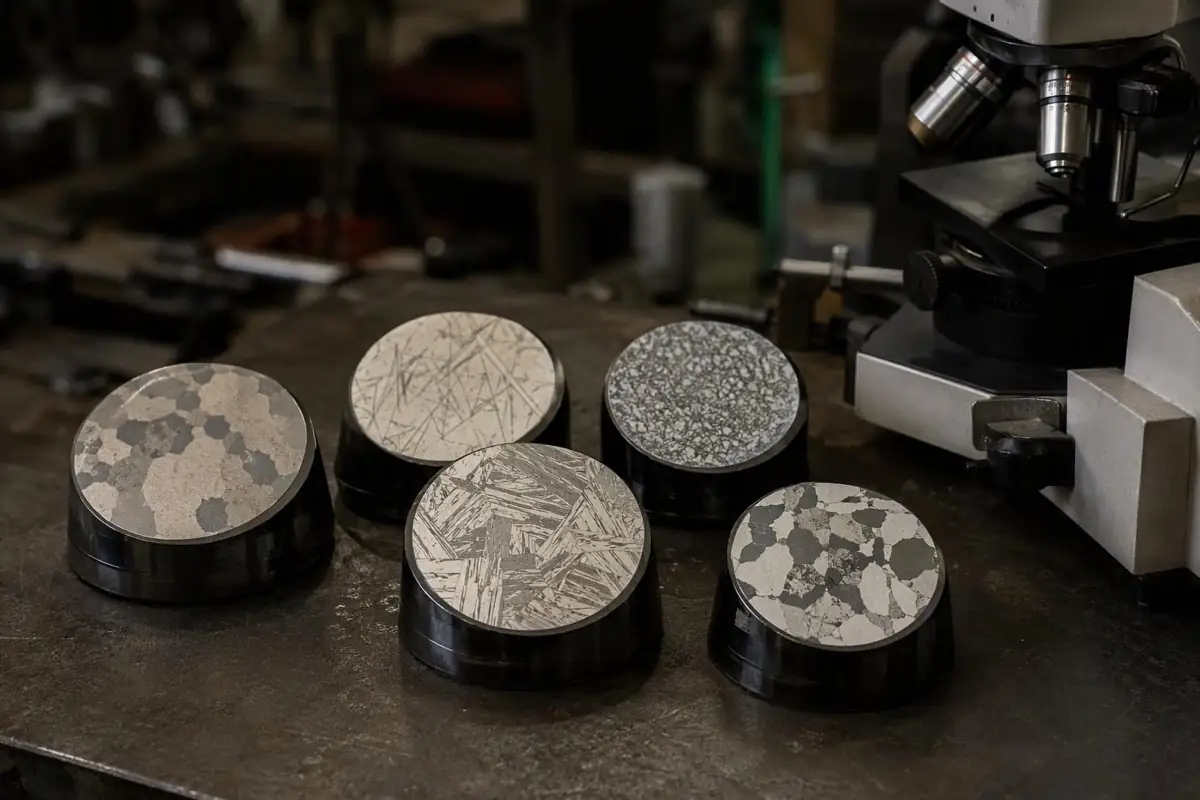
Steel Cleanliness: How ISO 4967 Rates Non-Metallic Inclusions
Steel cleanliness measures the type, size and amount of oxide, sulphide and silicate inclusions in steel. We explain the A, B, C, D and DS types and methods A and B of ISO 4967, how it differs from ASTM E45 and EN 10247, and what to write in the specification for bearing steels or fatigue-loaded shafts.
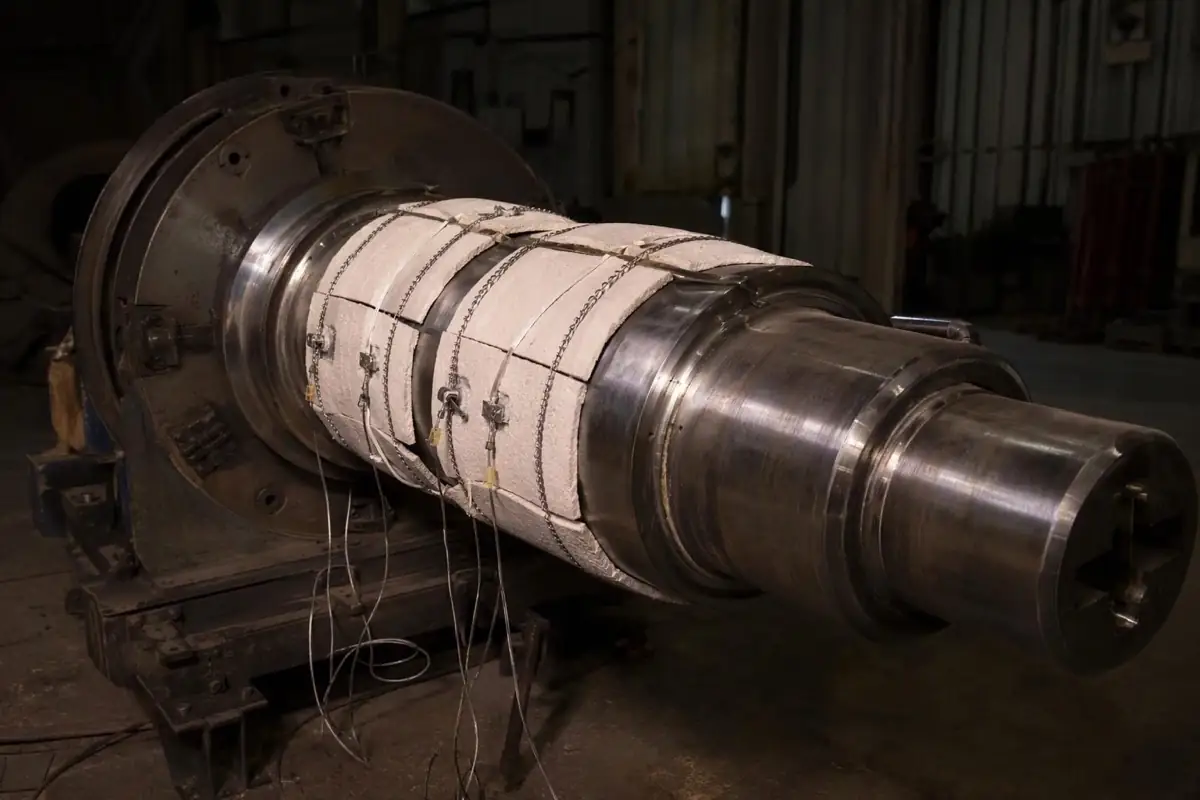
Welding 42CrMo4: Preheat, Interpass and PWHT for Q&T Steels
42CrMo4 and other quenched and tempered steels can be welded, but only under conditions: preheat, low-hydrogen consumables, controlled interpass temperature and post-weld heat treatment. The rule most often missed: on a quenched and tempered part, PWHT must not exceed the tempering temperature of the material. Datasheet values, the EN 1011-2 calculation and a work-order checklist.