Caps & Heads / HEAD-D
Dish End / Concave Cap
Concave or conical dish end variants tailored for process and cleanability requirements.
Technical Specifications
End / Connection Types
Key Features
- Concave/conical forms
- Sediment control
- Ease of cleaning
- Process-focused geometry
- Hygienic options
- Weld compatible
Applications
- Solids handling
- Slurry lines
- Food industry
- Pharma industry
- Wastewater
- CIP/SIP lines
Design Features
- Concave radius
- Sediment pocket
- Cleaning access
- Hygienic surface finish
- Weld compatible
- Custom fabrication
Pressure Performance
Dimension Table
| Size | Outside Diameter (mm) | Thickness (mm) | Dish Radius (mm) | Length (mm) | Weight (kg) |
|---|---|---|---|---|---|
| 2" | 60.3 | 3.91 | 76 | 76 | 0.9 |
| 4" | 114.3 | 6.02 | 152 | 114 | 3.2 |
| 6" | 168.3 | 7.11 | 229 | 152 | 7.1 |
| 8" | 219.1 | 8.18 | 305 | 190 | 12.8 |
| 12" | 323.9 | 10.31 | 457 | 267 | 28.4 |
| 16" | 406.4 | 12.70 | 610 | 330 | 48.6 |
Technical Notes
- 01Reduces solids build-up.
- 02Simplifies cleaning and maintenance.
- 03Common in hygienic processes.
- 04Inner surface quality is critical.
What is a torispherical head (dished end)?
A torispherical head is a dished end that closes pressure vessels, tanks and pipelines. It is defined by two radii: a large spherical crown radius and a small knuckle radius. Standard types are torispherical (DIN 28011 / Klöpperboden), semi-elliptical (DIN 28013 / 2:1 ellipsoidal), hemispherical, and the ASME B16.9 cap for pipe. It distributes pressure smoothly and reduces stress concentration.
Head types, radii and selection criteria
Head geometry determines the wall thickness and cost required for a given pressure. A hemispherical head is the strongest (thinnest wall) but the most expensive to make; a torispherical head is economical at low–medium pressure; a semi-elliptical (2:1) head is a balanced middle ground. In piping, an ASME B16.9 cap is a welded fitting that closes the end of a pipe. Material (carbon/stainless steel), pressure rating and standard (ASME, DIN, EN 13445) are chosen for the application. The two radii are what actually separate the standards, and confusing them is a common source of ordering errors. DIN 28011 (Klöpperboden) uses a crown radius equal to the diameter and a knuckle of 0.1 D. DIN 28013 (Korbbogen, the German semi-elliptical) is deeper: crown 0.8 D, knuckle 0.154 D. The ASME flanged & dished head shares the DIN 28011 crown (R = D) but specifies a tighter knuckle of 0.06 D — the sharper transition raises local stress at the knuckle and usually calls for more wall thickness, which is why a DIN 28011 head and an ASME F&D head of the same diameter are not interchangeable. The ASME 80:10 head (crown 0.8 D, knuckle 0.1 D) is the closer counterpart to the German Korbbogen. Height follows from that geometry rather than from a lookup: for DIN 28011 the dish height is h₁ ≈ 0.1935 D − 0.455 s, so a thicker wall makes the head marginally shallower. On top of h₁ sits the straight flange — the short cylindrical skirt left for welding — which is specified separately and must be added when you calculate overall vessel length.
DIN 28011 torispherical head dimensions
| Nominal Ø D (mm) | Crown radius R (mm) | Knuckle radius r (mm) | Wall s (mm) | Dish height h₁ (mm) |
|---|---|---|---|---|
| 500 | 500 | 50 | 6 | 94 |
| 800 | 800 | 80 | 8 | 151 |
| 1000 | 1000 | 100 | 10 | 189 |
| 1200 | 1200 | 120 | 10 | 228 |
| 1600 | 1600 | 160 | 12 | 304 |
| 2000 | 2000 | 200 | 12 | 382 |
R = D and r = 0.1 D are the defining ratios of DIN 28011. Dish height is calculated from h₁ ≈ 0.1935 D − 0.455 s, so it shifts with wall thickness; the straight flange is additional and specified separately. Figures are calculated reference values — the manufacturer's approved drawing governs the order.
Frequently Asked Questions
Torispherical vs ellipsoidal (2:1) head — what is the difference?+
A torispherical head (DIN 28011) has a crown radius ≈ diameter and knuckle ≈ 0.1×diameter; an ellipsoidal 2:1 head is deeper and suited to higher pressure.
How do you calculate torispherical head height?+
For a DIN 28011 head the dish height is h₁ ≈ 0.1935 D − 0.455 s, where D is the nominal diameter and s the wall thickness — e.g. Ø1000 mm at 10 mm wall gives ≈ 189 mm. The straight flange (cylindrical skirt) is added on top of this figure.
Is an ASME torispherical head the same as DIN 28011?+
No. Both use a crown radius equal to the diameter, but the ASME flanged & dished head has a knuckle radius of 0.06 D against 0.1 D for DIN 28011. The tighter ASME knuckle concentrates more stress and generally needs greater wall thickness, so the two are not interchangeable without recalculation.
Where are torispherical heads used?+
As end closures for pressure vessels, storage tanks, boilers and process equipment, and as ASME B16.9 caps in pipelines.
Which head is the strongest?+
A hemispherical head gives the highest pressure capacity (thinnest wall) but is the most expensive to manufacture. Torispherical is more economical.
What is the difference between a cap and a head?+
A cap is usually an ASME B16.9 fitting welded to the end of a pipe; a head is the larger dished end welded to a vessel or tank shell.
Related Blog Posts
Technical articles, guides and industry analyses
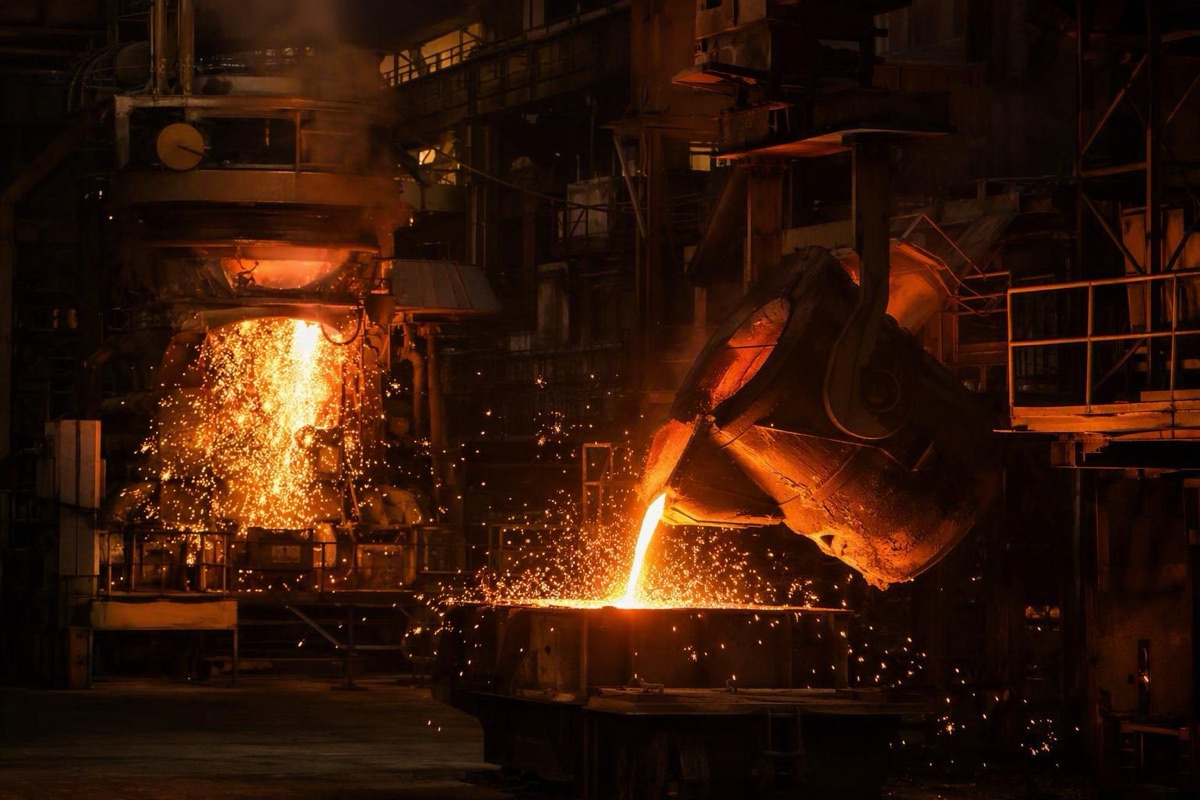
EAF vs BOF: Electric Arc Furnace vs Basic Oxygen Furnace
We compare the electric arc furnace (EAF) and the basic oxygen furnace (BOF) by energy source, charge material, scale, carbon footprint and typical products.
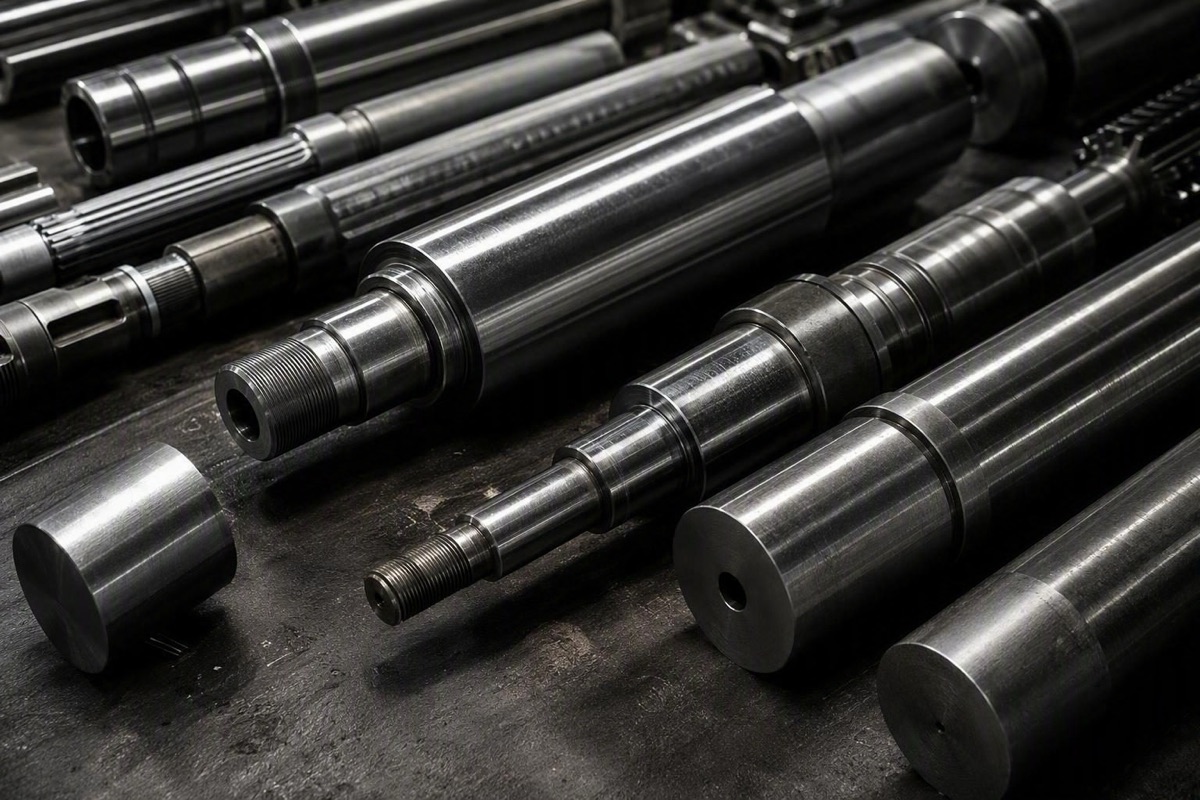
C45 vs 42CrMo4 Steel: Carbon or Alloy — Which to Choose?
We compare C45 (1045) carbon steel with 42CrMo4 (4140) chrome-moly quenched & tempered steel by hardenability, strength, welding and cost — which to choose and when?