Concentric Reducer
Axially aligned, symmetrical flow transition fitting for standard pipe reduction.
Technical Specifications
Key Features
- Axial alignment
- Low flow resistance
- Even pressure distribution
- Easy installation
- Standard dimensions
- High efficiency
Applications
- Vertical pipelines
- Pump outlets
- Tank connections
- General piping
- HVAC systems
- Water lines
Dimension Table
| Size | Large Outside Dia. (mm) | Small Outside Dia. (mm) | Thickness (mm) | Length (mm) |
|---|---|---|---|---|
| 1" x 1/2" | 33.4 | 21.3 | 3.38 | 51 |
| 2" x 1" | 60.3 | 33.4 | 3.91 | 76 |
| 4" x 2" | 114.3 | 60.3 | 6.02 | 102 |
| 6" x 4" | 168.3 | 114.3 | 7.11 | 140 |
| 8" x 6" | 219.1 | 168.3 | 8.18 | 152 |
| 12" x 8" | 323.9 | 219.1 | 10.31 | 203 |
| 16" x 12" | 406.4 | 323.9 | 12.70 | 356 |
Technical Notes
- 01Preferred for vertical lines.
- 02Prevents air bubble accumulation.
- 03Fluid velocity changes gradually.
- 04Pressure drop is minimal.
Concentric Reducer: grades, standards and selection notes
Concentric Reducer belongs to our Reducers range and is listed for sizes 1/2" x 1/4" – 48" x 24". Materials: A234 WPB, WPBW (ASTM A234 carbon steel; the W suffix marks welded construction); WP5, WP9, WP11, WP22 (Cr-Mo alloy steels for high-temperature service); 304/L, 316/L (austenitic stainless steel; L grades are low-carbon for welding, 316 adds molybdenum for chloride resistance).
Both ends share one centreline, so the concentric reducer is used in vertical lines and on pump discharges where a symmetric transition is wanted. It is supplied to ASME B16.9 (factory-made wrought butt-welding fittings (NPS 1/2 to 48)), MSS SP-75 (high-strength butt-welding fittings (WPHY) for pipelines), EN 10253 (European standard for butt-welding pipe fittings) and DIN 2616 (former DIN standard for butt-welding reducers, now covered by EN 10253). The temperature range given, −196°C – +815°C, applies depending on the material grade chosen.
The dimension table on this page lists 7 sizes from 1" x 1/2" to 16" x 12"; outside diameters at the large end run from 33.4 to 406.4 mm and the wall thickness in these rows from 3.38 to 12.70 mm. A butt-welding fitting takes the wall schedule of the pipe it is welded to, so the schedule is confirmed in the quotation.
Compared with the other types in this group: Eccentric Reducer — one flat side, offset centrelines; size range 2" x 1" – 36" x 18"; temperature −196°C – +650°C. Sudden Reducer — abrupt step, short body, higher pressure loss; size range 1" x 1/2" – 24" x 12"; standards manufacturer's standard or customer drawing; temperature −45°C – +400°C. Multi-Stage Reducer — several reduction steps for large ratios; size range 6" x 2" – 42" x 14"; standards manufacturer's standard or customer drawing. Low-Loss Reducer — long shallow cone, low pressure loss; size range 4" x 2" – 36" x 18"; standards manufacturer's standard or customer drawing; temperature −196°C – +650°C.
To request a quotation for Concentric Reducer, give the size (for example 1" x 1/2"), the wall thickness or schedule, the material (for example A234 WPB), the standard (ASME B16.9) and the quantity. Material is supplied with an EN 10204 3.1 inspection certificate; third-party inspection by bodies such as SGS, Bureau Veritas or TÜV is arranged on request. Whether the size can be supplied from stock, the minimum quantity and the lead time are stated in the quotation, which is sent within 24 hours.
What is a pipe reducer?
A reducer is a butt-weld fitting that joins two pipes of different diameters.
Reducers: guide and FAQRelated Blog Posts
Technical articles, guides and industry analyses
ASTM A234 WPB vs WP11 vs WP22: Which Fitting Material When?
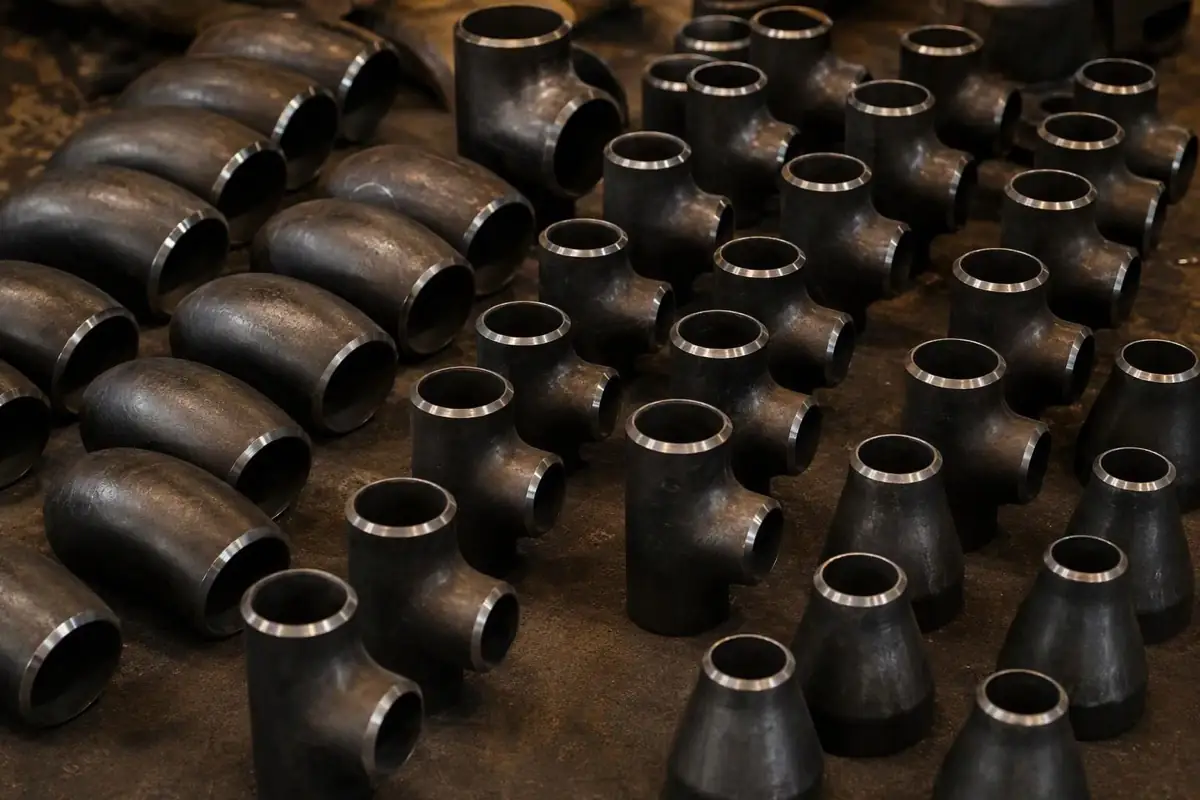
A234 WPB is a carbon steel fitting; WP11 (1¼Cr-½Mo) and WP22 (2¼Cr-1Mo) are chrome-moly alloys for high-temperature and creep service. We compare the grade codes, the chemistry and strength values in the standard, the P-numbers that matter for welding, and the pipe–fitting–flange material sets by service condition.
Steel Cleanliness: How ISO 4967 Rates Non-Metallic Inclusions
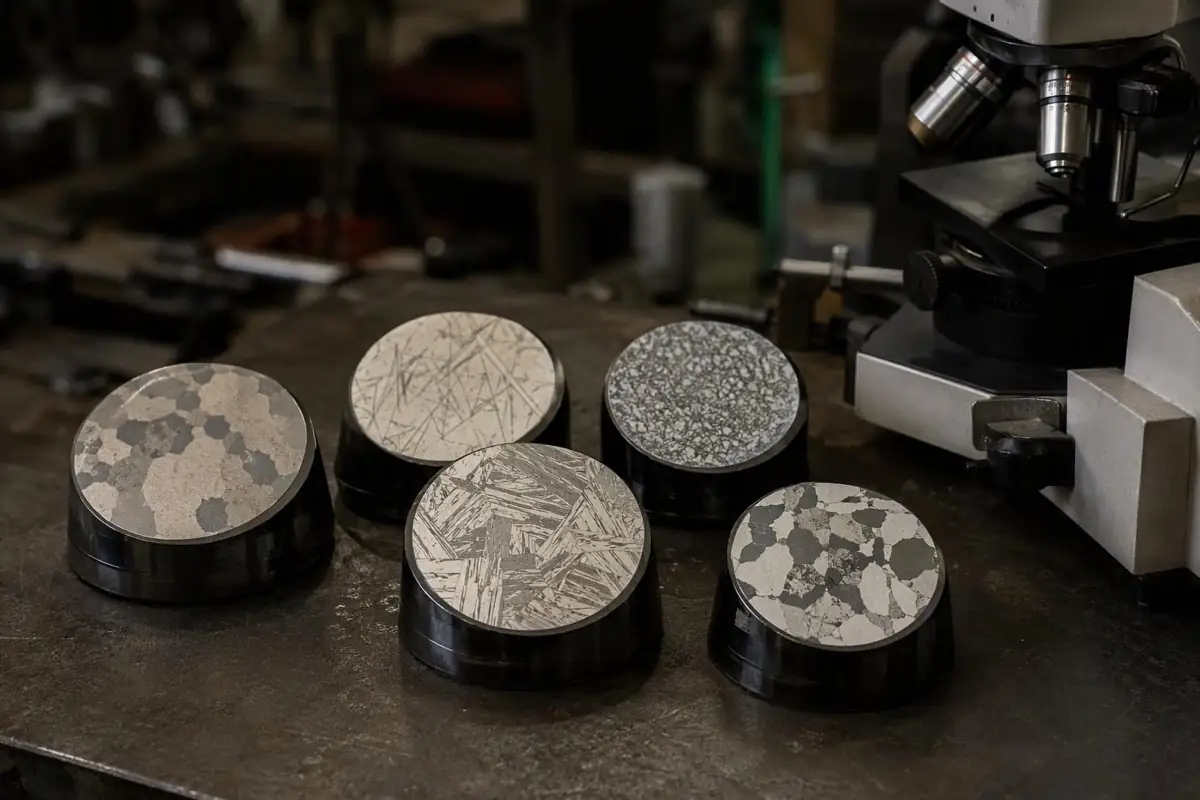
Steel cleanliness measures the type, size and amount of oxide, sulphide and silicate inclusions in steel. We explain the A, B, C, D and DS types and methods A and B of ISO 4967, how it differs from ASTM E45 and EN 10247, and what to write in the specification for bearing steels or fatigue-loaded shafts.